Blurry vision can disrupt your daily life, and you might find yourself searching for answers about astigmatism surgery. This common vision disorder causes fuzzy visibility at any distance. Many people in the UK deal with this condition. The human eye naturally has up to 0.5 diopters of astigmatism. Surgical correction becomes a good option if your condition goes beyond this level. Expert laser eye surgeons can now treat almost all astigmatism prescriptions with the right technology. You might be learning about treatments like SMILE—a keyhole laser technique. This procedure removes a contact lens-shaped disc of corneal tissue through a small incision.
Precision Vision London’s team knows you care about recovery time, costs, and outcomes. Most patients see better vision within 24–48 hours. The full recovery takes just one to two weeks. LASIK and SMILE procedures help patients recover their vision within hours. Many see well enough the next day. The cost of treatment plays a big role in your decision. London’s laser eye surgery for astigmatism costs £2,200 to £3,900 per eye. Lens-based procedures range from £3,500 to £5,000 per eye. This piece answers seven key questions about astigmatism surgery. Our specialists give a clear explanation to help you make the right choice about your vision correction.

What is astigmatism and how does surgery correct it?
People with astigmatism see blurry or distorted images because their cornea or lens has an irregular shape. Their eyes don’t have a perfectly round shape like a football. Instead, they’re shaped more like an egg or rugby ball. This makes light focus at multiple points instead of one spot on the retina. This vision problem affects about 40.4% of adults worldwide over age 30.
How astigmatism affects your eyes
Your eyes should have an evenly round cornea and lens, just like a basketball. This lets light rays bend evenly and focus clearly on the retina to give you sharp vision. The cornea or lens curves unevenly in different directions when you have astigmatism. This creates an irregular surface that affects how you see.
Two main types of astigmatism exist:
- Corneal astigmatism: Most people have this type, where the cornea’s shape is irregular
- Lenticular astigmatism: The lens inside your eye has an uneven shape, often linked to cataracts
You might have astigmatism along with other vision problems. Research shows that between 15% and 29% of eyes with cataracts also have astigmatism between 1 and 3 diopters.
How astigmatism surgery works
Surgeons reshape your cornea during astigmatism surgery. This fixes its irregular curve and helps light focus better on your retina. They use exact techniques to change the cornea’s shape and correct your vision.
The surgery works by:
- Making the steeper part of the cornea flatter
- Making the flatter part steeper
- Sometimes doing both
Surgeons reshape your cornea to make it more evenly curved. This eliminates the football or egg shape that blurs your vision. They use laser technology to make these changes with great precision, based on detailed measurements of your eye’s specific features.

Types of astigmatism surgical correction
You have several surgical options to fix astigmatism:
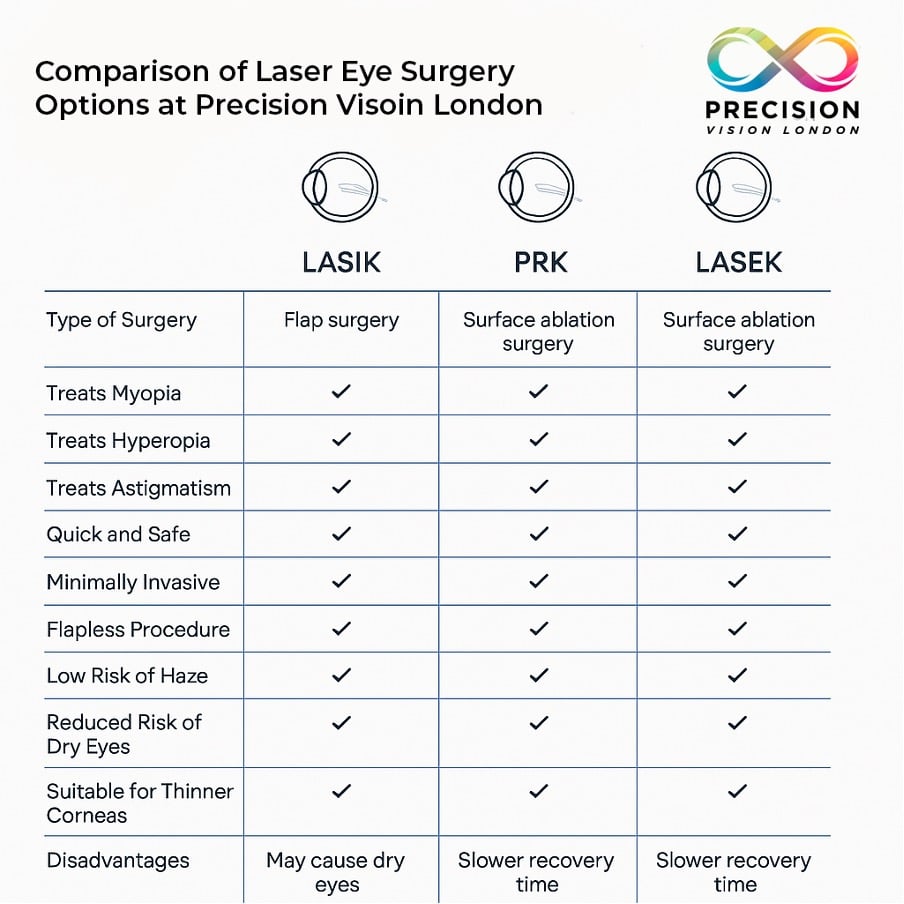
- LASIK (Laser-Assisted In-Situ Keratomileusis): This common surgery creates a thin flap in your cornea. The surgeon uses an excimer laser to reshape the corneal tissue underneath and puts the flap back in place. LASIK can fix astigmatism from 0.5 to 10 diopters.
- SMILE (Small Incision Lenticule Extraction): This newer technique is less invasive. The surgeon creates a small lens-shaped piece of tissue under your cornea’s surface using a laser, then removes it through a tiny cut. Your cornea stays stronger with this method, and you’re less likely to get dry eyes compared to other surgeries.
- PRK (Photorefractive Keratectomy): The surgeon removes your cornea’s thin protective layer completely. They reshape the cornea with an excimer laser, and the protective layer grows back naturally to match the new shape.
- LASEK (Laser Epithelial Keratomileusis): This works like PRK, but the surgeon loosens the protective layer with special alcohol instead of removing it. They fold it back, use the laser, then put it back in place.
- If you have severe astigmatism or can’t have laser surgery, you might consider:
- ICL Surgery (Implantable Collamer Lens): These special lenses go inside your eye to fix vision problems without touching your cornea.
- Toric IOLs (Intraocular Lenses): These work well during cataract surgery. The lenses have different strengths in different directions to fix astigmatism. They can correct corneal astigmatism from 0.75D to 4.75D.
Our specialists at Precision Vision London choose the best procedure for each patient. We look at detailed eye exams, corneal maps, and your vision needs to give you the best results with quick recovery.
Am I a suitable candidate for astigmatism surgery?
People often ask if they can get astigmatism correction surgery. The answer depends on several factors beyond just having astigmatism. The good news is that most patients who meet simple criteria can get surgical correction at specialist eye clinics.
Eligibility criteria for astigmatism surgery
To qualify for astigmatism surgery, you need to meet these requirements:
- Age threshold: You must be at least 18 years old, since younger eyes are still developing. Most surgeons prefer patients who are in their mid-twenties or older to get the best results.
- Prescription stability: Your vision prescription should stay mostly unchanged for at least 12-24 months. This stability shows that your refractive error has settled and makes surgical results more predictable.
- Prescription range: Modern astigmatism correction techniques can treat up to six diopters of astigmatism. This range covers most astigmatism cases that doctors see.
- Corneal health: Your cornea must be thick enough and have a regular shape for safe surgery. Some patients with irregular corneas might qualify for topography-guided treatments when standard procedures aren’t suitable.
- Overall eye health: You shouldn’t have certain eye conditions that could affect surgical outcomes or recovery.
Pregnant women and nursing mothers should wait at least three months after breastfeeding before they think about astigmatism surgery. This waiting time makes sure hormone changes don’t affect eye measurements.

Factors affecting candidacy
Several factors determine if astigmatism surgery suits you:
- Age considerations: While 18 is the minimum age, your suitability changes with age. Patients over 40-55 might do better with lens replacement options instead of laser procedures. This happens because your eye’s natural lens becomes less flexible as you age.
- Medical conditions: These health issues might affect your eligibility:
- Diabetes
- Rheumatoid arthritis
- Lupus
- Glaucoma
- Herpes infections of the eye
- Cataracts
- Corneal factors: Your cornea’s health, thickness, and regularity help determine the best procedure. Precision Vision London uses advanced imaging systems to spot even small corneal irregularities.
- Tear film quality: Poor tear film can affect both eligibility and recovery. Severe dry eye that doesn’t respond to treatment might rule out certain procedures.
- Medications: Your consultant surgeon will discuss how some prescription medications might affect your eligibility during your assessment.
Importance of personalised consultation
A full personal consultation helps address all these factors. Precision Vision London’s assessment includes:
- A detailed eye exam to check your astigmatism
- Corneal mapping with advanced technology
- Tear film quality checks
- A review of your eye health and medical history
- Discussion about your visual goals and lifestyle needs
Your first consultation usually takes 90-120 minutes to fully assess your visual system. Our specialists use visual aids and 3D models to show your cornea’s unique shape and explain how topography-guided treatments can fix your specific astigmatism. Our surgeons use advanced software like Phorcides and special algorithms to analyse complex cases. This custom approach ensures your treatment plan addresses both measured astigmatism and how you actually see. Sometimes standard laser correction isn’t the best choice. Lens replacement surgery or implantable contact lenses might work better. This personalised approach helps you get the most suitable recommendation for your situation.
What are the different types of astigmatism surgery available?
Surgical options to correct astigmatism have come a long way. The technology now gives us amazing precision and can be tailored to each patient’s needs. Several procedures can fix astigmatism effectively. Each option has its benefits based on your eye structure and vision requirements.
Overview of LASIK, SMILE, PRK, and ICL
Here are the main surgical options you can choose from:
- LASIK (Laser-Assisted In Situ Keratomileusis) remains the most popular laser procedure for astigmatism. The surgeon creates a thin flap in the cornea with a microkeratome blade or femtosecond laser. An excimer laser reshapes the corneal tissue underneath, and then the flap goes back in place. The whole process takes about 15 minutes for both eyes. You won’t feel any pain because local anaesthetic drops numb your eyes completely.
- SMILE (Small Incision Lenticule Extraction) gives you a less invasive alternative to LASIK. The procedure uses just a 2-3mm incision instead of a larger flap, which minimises corneal disruption. Your surgeon uses a femtosecond laser to create a small disc of corneal tissue (lenticule) and removes it through the tiny opening. This ‘keyhole’ approach works great for people who have dry eyes or play contact sports.
- PRK/LASEK (Photorefractive Keratectomy/Laser Epithelial Keratomileusis) are surface treatments applied directly to your cornea without creating a flap. PRK removes the outer layer completely, while LASEK loosens it with alcohol, folds it back, and repositions it after treatment. These methods work best for patients who have thin corneas or specific medical conditions that rule out LASIK.
- ICL (Implantable Collamer Lens) provides a non-laser solution by placing a soft, flexible lens between your iris and natural lens. This option works well for patients who have severe astigmatism or thin corneas that might not suit laser procedures.
Choosing the right astigmatism surgery procedure
Your ideal procedure depends on several key factors:
- Corneal thickness: SMILE, PRK/LASEK, or ICL might work better than LASIK if you have thin corneas
- Astigmatism severity: ICL or toric intraocular lenses could be better for higher astigmatism
- Lifestyle considerations: Athletes and people in high-impact jobs might benefit more from flapless procedures like SMILE
- Recovery preferences: LASIK lets you recover faster than PRK/LASEK
- Dry eye tendency: SMILE and ICL usually cause fewer dry eye symptoms because they disrupt fewer corneal nerves
A full pre-operative assessment helps determine which procedure will give you the best results based on your eye characteristics. Your ophthalmologist will review your case through detailed testing before recommending the most suitable surgical approach.
Latest technology used at Precision Vision London
Precision Vision London uses state-of-the-art technology to achieve excellent results in astigmatism correction:
- Topography-guided treatments create personalised corneal maps that spot subtle irregularities other basic tests might miss. This technology builds detailed three-dimensional maps of your cornea and helps create precise treatment plans that match your eye structure.
- Advanced femtosecond lasers used in SMILE and LASIK procedures deliver precise corneal flaps and lenticules. This leads to more predictable outcomes and quicker healing.
- Scheimpflug tomography provides detailed information about your corneal structure. This enables customised treatment approaches that can address complex astigmatism patterns.
- Latest-generation excimer lasers come with sophisticated eye-tracking systems. These adjust to tiny eye movements during treatment and ensure accurate tissue removal and reshaping.
The specialists at Precision Vision London have extensive expertise with all these procedures. They’ll recommend the best option based on your vision needs and lifestyle.
What should I expect before, during, and after surgery?
Understanding what to expect during your astigmatism surgery trip will ease your anxieties and will give a better outcome. Precision Vision London’s detailed approach guides you through each stage with expert care and support.
Astigmatism surgery before and after: what to know
Your personalised treatment plan starts with a full eye examination. The original consultation takes about 90-120 minutes. This time allows doctors to evaluate your visual system completely.
You need to do these things before surgery:
- Discontinue contact lens wear – soft contacts for at least one week, toric lenses (those correcting astigmatism) for two weeks, and rigid gas permeable lenses for longer periods
- Skip eye makeup on surgery day
- Get someone to drive you home after the procedure
- Choose comfortable, loose-fitting clothing
- Tell your surgeon about your medications
These steps help your cornea return to its natural shape for accurate surgical planning. Our specialists use advanced diagnostic technology to map your cornea and find the best treatment approach.
Step-by-step breakdown of the procedure
Your surgeon starts by applying numbing eye drops to ensure your comfort. The experience varies slightly based on your specific procedure, but all astigmatism surgeries at Precision Vision London share common elements. LASIK takes less than 15 minutes per eye. Your surgeon creates a thin corneal flap using a femtosecond laser. An excimer laser then reshapes your cornea according to your personalised treatment plan. This vital step smooths the uneven curvature that causes astigmatism. The corneal flap goes back in place to start the natural healing process.
SMILE procedures create a small disc of tissue (lenticule) beneath your corneal surface. The surgeon removes it through a tiny incision. This ‘keyhole’ approach works especially well for suitable candidates. You stay awake during these procedures but feel no pain—just mild pressure. Looking at a point of light helps keep your eye steady while the laser works precisely.
Recovery timeline and aftercare support
Most patients see better within 24 hours after surgery, though full stabilisation takes several weeks. You can usually drive and work within one to two days after LASIK. PRK/LASEK recovery needs 4-7 days.
Right after surgery, you might notice:
- Mild discomfort and watery eyes
- Temporary blurred vision
- Sensitivity to light
- A gritty sensation
These symptoms go away quickly. We provide medicated eye drops to help healing and reduce inflammation. Your first follow-up happens 1-2 days after surgery, and we keep monitoring your progress regularly. The first phase of recovery takes 1-2 days, but complete healing continues for 3-6 months. Your vision improves within days, but your eyes need 2-3 months to fully stabilise. Our detailed aftercare programme supports you throughout your healing trip. You get 24-hour access to clinical advice and scheduled check-ups at one month and three months after your procedure.
Are there any risks or side effects I should be aware of?
Most people worry about safety when they think about any surgery. The good news is that almost all astigmatism surgery patients have great outcomes with very few complications.

Common side effects and how they are managed
Right after astigmatism surgery, patients may notice some short-term side effects that usually go away within days to months. These include:
- Dry eyes – About 30% of patients feel this discomfort most strongly around three months after surgery, but it gets better within six months. Prescription eye drops or artificial tears help manage this condition well.
- Visual disturbances – You might see light scatter effects like glare, halos, starbursts around lights, or ghost images. These effects usually get better in a few months and show up mostly in low-light conditions.
- Temporary blurred vision – Your vision may go up and down for three to six months before it becomes stable.
- Sensitivity to light – This gets better within the first few weeks as your eyes adjust after the procedure.
- Red blotches on the white of your eye are normal and fade away as you heal.
Serious complications from astigmatism surgery rarely happen. Studies show that more than 99% of patients have no complications at all.
Rare complications and how we minimise them
You should also know about the uncommon complications that can happen:
- Refractive outcomes – Sometimes, surgeons might remove too little tissue (undercorrection) or too much tissue (overcorrection). We can fix these issues with touch-up procedures if needed.
- Corneal issues – In very rare cases, problems like corneal ectasia (thinning and bulging of the cornea) can develop. Our careful screening at Precision Vision London spots risk factors that might lead to this condition.
- Infections – Modern procedures have a very low infection risk – about 1 in 20,000 cases. You’re more likely to get an eye infection from wearing contact lenses than from astigmatism surgery.
- Our careful pre-operative assessment looks for risk factors such as autoimmune conditions, weak immune systems, ongoing dry eyes, or other eye conditions that might increase complication risks.
How Precision Vision London keeps you safe
Patient safety guides everything we do. Our safety measures include:
- Advanced diagnostic technology – Complete corneal mapping finds subtle irregularities and helps create a treatment plan that matches your eye’s unique structure.
- Careful screening – We take 90-120 minutes for your first consultation to check if the procedure suits you and spot any risk factors.
- Modern equipment – We use only the latest surgical equipment including the VisuMax MEL 90 from Carl Zeiss. New technology reduces the chance of errors.
- Expert surgical team – Our surgeons have registration with the General Medical Council and belong to The Royal College of Ophthalmologists and The Royal College of Surgeons. They keep learning through advanced training.
- Complete aftercare – We check on your healing regularly, with the first check happening within 24-48 hours after surgery.
No surgery comes without risks, but modern astigmatism correction procedures have an excellent safety record. Our clinic’s careful approach to patient care helps achieve the best possible outcomes with minimal risk.
How much does astigmatism surgery cost in the UK?
The cost of astigmatism surgery plays a crucial role when you’re planning to improve your vision. Our team at Precision Vision London believes in clear pricing that helps you plan your investment in better eyesight.
Typical pricing for different procedures
The price tag for astigmatism correction in the UK changes based on your vision needs and the type of surgery that works best for you. Looking at laser procedures, LASIK for astigmatism costs between £2,195 and £2,795 per eye. LASEK prices range from £2,195 to £2,700 per eye. Advanced treatment options come with different price points:
- LASIK with Wavefront technology: £2,695 to £3,250 per eye
- LASEK with Wavefront technology: £2,495 to £2,950 per eye
- ReLex SMILE procedure: £2,495 to £3,250 per eye
Patients with severe astigmatism or those who can’t have laser surgery might need lens-based options:
- Lens Replacement Surgery: £3,595 to £4,300 per eye
- Implantable Contact Lens (ICL): £3,750 to £4,500 per eye in London
London clinics usually charge £2,000 to £3,500 per eye for laser astigmatism correction. Lens-based procedures cost between £3,500 and £5,000 per eye. UK patients pay an average of £3,420 for astigmatism laser eye surgery.
Value of investing in long-term vision correction
The numbers tell an interesting story about the long-term benefits. A typical UK resident spends £180 on glasses every three years, £175 yearly on contact lenses and solutions, plus £20 for annual eye exams. At £3,400, laser eye surgery starts paying for itself after about 14 years. The benefits go beyond money. You’ll enjoy freedom from daily lens care, sharper vision, and an easier life especially if you’re active. This surgery becomes a one-time investment instead of a recurring expense. The NHS doesn’t cover astigmatism surgery because they see it as an elective procedure. Most patients need to go through private treatment to correct their vision.
Will I still need glasses after surgery?
Your vision freedom after surgery is the main goal if you’re thinking over astigmatism correction. A clear understanding of realistic expectations will help prepare you for your recovery trip.
Expected visual outcomes
More than 99% of patients achieve vision of 20/20 or better after astigmatism surgery. This vision level lets you handle most daily activities without glasses or contact lenses. Notwithstanding that, results differ based on your specific eye characteristics and the procedure type. The best outcomes after surgery need residual astigmatism control within 0.5 diopters. Research shows that objective and subjective visual quality get worse by a lot if postoperative residual astigmatism goes beyond this threshold. Your intermediate and near vision might stay relatively stable.
Factors that affect long-term results
Your long-term visual outcome depends on several key elements:
- Residual astigmatism level – Even low levels (≥0.5D) affect visual outcomes after surgery by a lot
- Age – Myopic regression happens more in older patients over time
- Axial length – Eyes with longer axial length tend to move toward myopic shift
- Healing response – Your unique healing patterns shape your final corneal form
- Tear film quality – Poor tear film affects your visual clarity and comfort
You might need reading glasses as presbyopia develops naturally with age, whatever the success of your astigmatism correction. Astigmatism surgery fixes your distance vision but can’t stop age-related changes in near vision.
Realistic expectations and follow-up care
Your vision usually becomes stable within 3-6 months after surgery. You might notice some changes during this time. Precision Vision London’s regular follow-up visits help monitor this stabilisation process to ensure the best results. Some patients need glasses to drive at night. Low-light conditions can make subtle visual imperfections more noticeable. Your surgeon will talk about these possibilities during your consultation to set clear expectations. Precision Vision London’s detailed aftercare programme offers multiple follow-up visits throughout your first year after surgery. This ensures optimal vision development and quick solutions to any concerns.
Comparison Table
| FAQ Topic | Key Information | Treatment Options | Typical Timeframes | Notable Considerations |
|---|---|---|---|---|
| What is astigmatism? | Blurred vision occurs due to irregular cornea/lens shape | LASIK, SMILE, PRK, LASEK, ICL, Toric IOLs | N/A | Correction ranges from 0.5 to 10 diopters |
| Candidate Suitability | Patients must be 18+ years old with stable prescription lasting 12-24 months | Options depend on corneal thickness and health | The core team needs 90-120 minutes for consultation | New mothers need 3 months after pregnancy/nursing |
| Types of Surgery | Surgery reshapes cornea or implants lens | LASIK, SMILE, PRK/LASEK, ICL | LASIK takes 15 minutes per eye | Different conditions need specific treatments |
| Pre/Post Surgery Process | Patients must stop wearing contacts and avoid makeup | Numbing drops help with all procedures | Recovery takes 24-48 hours; full stability needs 3-6 months | Doctors schedule regular checkups |
| Risks and Side Effects | Patients may experience dry eyes, visual changes, temporary blur | Medication and aftercare help manage effects | Side effects usually resolve within 3-6 months | Complications affect less than 1% of patients |
| Post-Surgery Vision | Vision improves to 20/20 or better for 99% of patients | Additional procedures boost results if needed | Vision stabilises in 3-6 months | Age may require reading glasses |
Conclusion
You don’t need to let astigmatism control your life or blur your vision anymore. This piece shows how advanced surgical techniques can fix this common eye problem. You might even say goodbye to glasses and contact lenses forever. Most patients get 20/20 vision or better after surgery. Many don’t need glasses at all for distance vision. Your experience starts with a full 90-120 minute check-up at Precision Vision London. Our specialists will create a custom treatment plan that matches your eye’s needs. LASIK, SMILE, PRK or lens-based solutions – we’ll find what works best for your eyes. Our surgical team has the expertise and advanced technology to deliver great results. We use state-of-the-art equipment that spots the smallest corneal issues for precise surgery.
Recovery happens faster than you might think. Many patients see better within 24-48 hours. Vision usually stabilises in 3-6 months. Our detailed aftercare programme supports and monitors your progress throughout this time. Temporary effects like dry eyes can happen at first. Serious problems are rare – less than 1% of patients experience them. Your safety comes first at every step. GMC-registered surgeons who belong to The Royal College of Ophthalmologists and The Royal College of Surgeons will guide your treatment.
Costs depend on your chosen procedure. Laser corrections range from £2,000-£3,500 per eye. Lens-based solutions cost between £3,500-£5,000. We offer flexible payment options to make this life-changing treatment available. Surgery for astigmatism is a big decision. All the same, thousands of happy patients in the UK now enjoy clearer vision and better quality of life after treatment. Precision Vision London will guide you through every step if you want to explore your options. We offer expertise, compassion and tailored care for your vision transformation.
Key Takeaways
Modern astigmatism surgery offers life-changing vision correction with remarkable safety and precision, helping you achieve freedom from glasses and contact lenses.
- Multiple surgical options available: LASIK, SMILE, PRK, and ICL procedures can correct astigmatism from 0.5 to 10 diopters with 99% of patients achieving 20/40 vision or better.
- Comprehensive candidacy assessment essential: You must be 18+ with stable prescription for 12-24 months; a thorough 90-120 minute consultation determines your ideal treatment approach.
- Rapid recovery with minimal risks: Most patients see improvement within 24-48 hours, with serious complications affecting less than 1% of cases and full stabilisation in 3-6 months.
- Investment ranges £2,000-£5,000 per eye: Laser procedures cost £2,000-£3,500 whilst lens-based options range £3,500-£5,000, with flexible financing available to make treatment accessible.
- Long-term vision freedom achievable: Over 99% of patients no longer need distance glasses post-surgery, though reading glasses may be required with age due to natural presbyopia development.
The key to successful astigmatism correction lies in choosing an experienced clinic with advanced technology and comprehensive aftercare. At specialist centres like Precision Vision London, personalised treatment plans ensure optimal outcomes tailored to your unique visual needs and lifestyle requirements.
FAQs
Q1. How long does it take to recover from astigmatism surgery? Most patients experience improved vision within 24-48 hours after surgery. However, full stabilisation of vision typically takes 3-6 months. During this time, you’ll have regular follow-up appointments to monitor your progress.
Q2. What are the main types of astigmatism surgery available? The primary surgical options for astigmatism correction include LASIK, SMILE, PRK/LASEK, and ICL (Implantable Collamer Lens). Each procedure has its own benefits and is recommended based on factors such as corneal thickness, astigmatism severity, and overall eye health.
Q3. What percentage of patients achieve good vision after astigmatism surgery? Over 99% of patients achieve vision of 20/40 or better following astigmatism surgery. This level of vision typically allows for most daily activities without the need for glasses or contact lenses.
Q4. How much does astigmatism surgery cost in the UK? In the UK, laser astigmatism surgery typically costs between £2,000 and £3,500 per eye, while lens-based procedures range from £3,500 to £5,000 per eye. Many clinics offer flexible payment plans to make treatment more accessible.
Q5. Are there any common side effects after astigmatism surgery? Common temporary side effects include dry eyes, light sensitivity, and visual disturbances such as glare or halos around lights. These effects usually subside within a few weeks to months after surgery. Serious complications are extremely rare, affecting less than 1% of patients.