Did you know that having 20/20 vision doesn’t guarantee perfect eyesight? LASIK specialists in London discovered that many people with technically perfect visual acuity still struggle with everyday visual tasks. Your eyes might feel tired, give you headaches, or make it hard to focus during routine activities, even with 20/20 vision.
Standard eye tests check how clearly you can see high-contrast black letters on a white background from a specific distance. These examinations rarely check how well your eyes work in low-light conditions or process subtle differences in contrast. Your clinical eye test results might not match your real-life visual experiences, especially when you have to drive at night or move around in dim environments. Precision Vision London uses advanced diagnostic technology to give you a complete picture of your visual acuity and contrast sensitivity. This helps us understand your complete visual perception instead of just measuring clarity.

What 20/20 Vision Really Means
That 6/6 or 20/20 is a notation on your eye test report doesn’t mean perfect vision, it just shows “normal” visual acuity. This difference is vital for anyone who wants to think about contrast sensitivity in LASIK London procedures. You might struggle with night vision even with “perfect” eyesight.
How the eye chart works
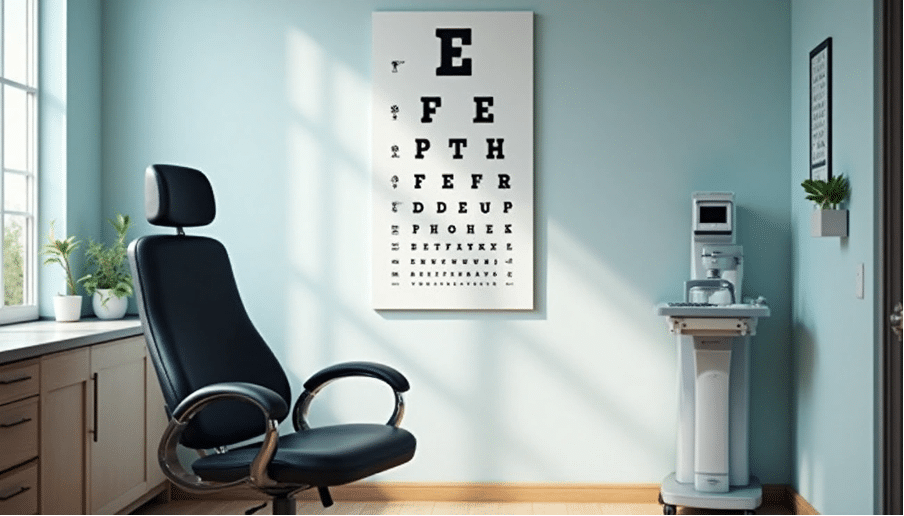
Dr Snellen developed the standard eye chart in 1862. It measures visual acuity when you read letters from a specific distance, usually 6 metres in the UK. The measurement shows up as a fraction. The first number (6) shows your distance from the chart. The second number tells you the distance at which a person with standard vision could read the same line. Each letter on the 6/6 line subtends an angle of 5 minutes of arc. Each stroke of the letter creates an angle of 1 minute of arc at the eye. Studies reveal that all but one of these adults can read the 20/20 line without correction. Some letters (S, F, C, B) are more challenging to identify than others (A, L, T, Z). This can affect test results.
Why 20/20 doesn’t reflect real-life vision
Your 6/6 vision means you see clearly at a distance, but that’s not the whole story. Visual acuity is just one part of a complex system with 17 key visual skills. These skills include eye coordination, knowing how to focus, depth perception, and contrast sensitivity, which matters a lot for night driving.
You might have 6/6 vision and still face these issues:
- Difficulty driving at night
- Eye strain with close work
- Headaches after reading
- Problems with peripheral awareness
Standard visual acuity testing only measures how well you see high-contrast black letters on a white background—something you rarely encounter in daily life.
The limits of standard eye tests
Standard eye exams check your visual sharpness at a distance but miss other important aspects of vision. They don’t check:
- Contrast sensitivity, knowing how to spot subtle differences between light and dark
- Eye coordination and binocular vision
- Focusing ability under varying conditions
- Visual perception and processing
Standard eye tests might miss these issues. Many eye diseases like glaucoma, macular degeneration, and diabetic retinopathy can progress quietly while central vision stays fine at first. Precision Vision London’s contrast sensitivity LASIK technology delivers more than conventional measurements. We give you a complete picture of your visual acuity and contrast sensitivity. This matters especially when you want better night vision and clarity in low-light conditions.
Understanding Contrast Sensitivity
Your vision quality depends heavily on contrast sensitivity, but most people don’t realise how important it is until problems arise. This vital aspect of vision helps explain why some people have trouble driving at night, even with “perfect” eyesight.
What is contrast sensitivity?
Contrast sensitivity shows how well you can spot differences in brightness between objects and their backgrounds. Standard eye tests check your ability to read black letters on a white background. However, contrast sensitivity shows how well you can distinguish objects when there isn’t much contrast between them. You might have 20/20 vision, but still have reduced contrast sensitivity by a lot.
Why it matters for night vision
Your contrast sensitivity becomes really important in dark conditions, where your ability to notice contrast affects how well you see. Studies show that older drivers who avoid nighttime driving often have poor contrast sensitivity. This explains why all but one of these three older drivers say they’ve limited or stopped driving at night.
Poor contrast sensitivity makes it hard to:
- See pedestrians, road signs or obstacles in dark conditions
- Bounce back from bright headlights
- See details on dark roads
- Judge distances at night
How does it affect daily tasks like night driving
Drivers with poor contrast sensitivity face six times more crash risk than those with normal contrast sensitivity. Even one eye with bad contrast sensitivity raises accident risk by a lot. Research confirms that testing contrast sensitivity helps predict who might get into crashes. Night driving creates special challenges if you have contrast sensitivity issues. Seeing road signs, spotting pedestrians, and reacting to dangers becomes harder in low-light conditions. Studies prove that contrast sensitivity predicts how many road objects drivers can recognise at night.
The difference between visual acuity and visual perception
Visual acuity measures how sharp your vision is from a specific distance. Visual perception shows how your brain understands what your eyes see. A person’s vision might test as ’20/20′, but they could still struggle with visual perception skills. Visual perception includes different senses like sight, sound, touch, and balance. This helps explain why some people with perfect vision scores still have trouble driving at night or reading in dim light, their contrast sensitivity might not work well even though they have excellent acuity scores. Precision Vision London’s contrast sensitivity LASIK technology gives you a complete picture of your vision by checking both visual acuity and contrast sensitivity.
How Contrast Sensitivity LASIK Works
Modern LASIK technology has evolved from just fixing refractive errors. Now it boosts vision quality, especially when you have challenging lighting conditions.

What makes it different from standard LASIK
Contrast sensitivity LASIK uses wavefront-guided technology that creates a detailed 3D map of your eye’s unique imperfections. Standard procedures only fix nearsightedness, farsightedness, or astigmatism. This advanced approach targets subtle corneal irregularities affecting how light enters your eye. Clinical studies show that wavefront-guided LASIK delivers 88% improvement in contrast sensitivity measurements, while standard procedures achieve just 40%.
How does it improve clarity and night detail?
The procedure helps you detect subtle differences between objects that aren’t black and white. It reduces higher-order aberrations, complex vision errors that glasses can’t fix, which usually cause halos, starbursts and ghosting around lights. These improvements show up a lot at high spatial frequencies under mesopic (low-light) conditions. You’ll notice the difference when driving at night or during evening activities.
Who is a good candidate for LASIK contrast sensitivity
Ideal candidates include those who:
- Have night vision difficulties despite good measured acuity
- Deal with glare while driving after dark
- Have pupils that dilate a lot in dim lighting
- Show reduced contrast sensitivity in pre-operative testing
Technology used at Precision Vision London
Precision Vision London uses advanced diagnostic equipment to test your contrast sensitivity with specialised eye charts featuring light grey letters on bright backgrounds. Our wavefront analysis creates thousands of data points to build a detailed visual blueprint. This customised treatment preserves and often improves your vision’s “crispness” something traditional vision tests don’t measure.
Why Choose Precision Vision London
Patients looking for contrast sensitivity LASIK should evaluate expertise, technology, and patient care carefully. Precision Vision London emerges as a leading choice for patients who want better night vision and clarity.

Expert surgeons and personalised care
Dr CT Pillai leads Precision Vision London with 30 years of experience and more than 50,000 successful procedures. He pioneered bilateral LASIK treatment in the UK by performing procedures on both eyes on the same day and now oversees all clinical protocols. Your two-hour consultation combines comprehensive testing with a customised treatment plan that matches your visual needs and lifestyle.
Advanced diagnostics and immersive testing
The clinic uses the SCHWIND AMARIS®️ 1050RS, which stands as the world’s highest-performance eye laser for refractive surgery. This remarkable system works at a 1050 Hz frequency and completes ablation in just 1.3 seconds per dioptre. The system’s groundbreaking active 7D eye tracking adjusts to all eye movements with zero latency time, which ensures perfect accuracy during your procedure.
Trusted reputation in LASIK London
Precision Vision London operates as an independent, surgeon-led practice from Harley Street, London’s clinical heart. The results tell a compelling story – 100% of patients achieve driving standard vision, while 99% reach 20/20 vision or better after surgery.
Patient success stories and outcomes
Patients describe their experience as “life-changing”, and many achieve perfect vision shortly after treatment. The clinic boasts a remarkable 4.97 out of 5 stars from 166 reviews on Doctify, making it one of London’s most trusted vision correction centres.

Conclusion
Perfect eyesight means much more than the simple 20/20 measurement most people know about. This piece explores how contrast sensitivity affects your ground visual experience, especially when you drive at night or in poor light. Regular eye tests don’t capture this vital aspect of vision. Many people wonder why they have problems seeing despite their “normal” acuity.
Contrast sensitivity LASIK has evolved beyond conventional procedures. This technology doesn’t just fix refractive errors. It tackles subtle corneal irregularities that affect how light enters your eye. The result helps you detect differences between objects that aren’t just black and white. These improvements make a huge difference in dim light and night driving.
Precision Vision London pioneers this specialised treatment. Dr CT Pillai brings confidence to anyone thinking about this life-changing procedure with 30+ years of experience and more than 50,000 successful surgeries. The clinic uses the SCHWIND AMARIS®️ 1050RS, the world’s highest-performance eye laser. This technology will give a unique precision during treatment. The numbers tell the story clearly. Every patient achieves driving standard vision. Almost all reach 20/20 vision or better after surgery. Without doubt, these remarkable results come from advanced technology and personalised care. Each patient gets a two-hour consultation before treatment.
Clear vision in all lighting conditions affects your quality of life substantially. Looking beyond simple acuity measurements becomes vital when you think about vision correction. Contrast sensitivity LASIK at Precision Vision London takes a complete approach. It goes beyond what you see on an eye chart to help you experience the world clearly, day or night.
Key Takeaways
Understanding the difference between visual acuity and real-world vision quality can help you make informed decisions about advanced LASIK procedures that address night vision challenges.
- 20/20 vision only measures high-contrast letter reading, not real-world visual performance in low-light conditions
- Contrast sensitivity determines your ability to distinguish objects in dim lighting, crucial for safe night driving
- Wavefront-guided LASIK improves contrast sensitivity by 88%, compared to just 40% with standard procedures
- Poor contrast sensitivity increases crash risk by six times, making night driving hazardous
- Advanced LASIK technology addresses subtle corneal irregularities that glasses cannot correct, enhancing overall vision quality
When performed with cutting-edge technology like the SCHWIND AMARIS system, contrast sensitivity LASIK offers a comprehensive solution that goes beyond traditional vision correction, potentially transforming your ability to see clearly in all lighting conditions.
FAQs
Q1. What is contrast sensitivity, and why is it important for night vision? Contrast sensitivity is the ability to detect differences in luminance between objects and their backgrounds. It’s crucial for night vision as it affects how well you can see in low-light conditions, such as distinguishing pedestrians or road signs while driving at night.
Q2. How does contrast sensitivity LASIK differ from standard LASIK? Contrast sensitivity LASIK uses wavefront-guided technology to create a detailed 3D map of your eye’s unique imperfections. It targets subtle corneal irregularities that affect how light enters your eye, improving vision quality in challenging lighting conditions, unlike standard LASIK, which only addresses basic refractive errors.
Q3. Can I have perfect vision but still struggle with night driving? Yes, you can have 20/20 visual acuity but still experience difficulties with night driving. This is because standard eye tests don’t measure contrast sensitivity, which is essential for seeing clearly in low-light conditions. Poor contrast sensitivity can significantly impact your ability to drive safely at night.
Q4. Who is an ideal candidate for contrast sensitivity LASIK? Ideal candidates for contrast sensitivity LASIK include those who experience night vision difficulties despite having good measured acuity, struggle with glare while driving after dark, have pupils that significantly dilate in dim lighting, or show reduced contrast sensitivity in pre-operative testing.
Q5. What technology does Precision Vision London use for contrast sensitivity LASIK? Precision Vision London utilises the SCHWIND AMARIS®️ 1050RS, which is the world’s highest-performance eye laser for refractive surgery. This advanced system operates at a 1050 Hz frequency and features a 7D eye tracking system, ensuring exceptional accuracy throughout the procedure.