Looking for a solution to your high prescription that makes laser eye surgery impossible? The best ICL surgeon in London could help you achieve visual freedom. ICL surgery works perfectly for people with extremely high prescriptions or thin corneas that prevent them from getting traditional laser procedures.
Implantable Collamer Lens (ICL) surgery places a soft, biocompatible lens inside your eye, right between the iris and your natural lens. This amazing procedure takes just 10 minutes per eye without any pain. ICL eye surgery brings many benefits beyond better vision. Patients experience fewer dry eyes and better night vision. The ICL implant can be removed later if needed, unlike laser treatments.
Precision Vision London helps people break free from glasses and contact lenses. ICL surgery helps most patients become independent from glasses, and they notice improvements within 24 hours after the procedure. The procedure costs £3,750 per eye, but patients find this investment worthwhile for permanent vision correction. This piece covers everything about ICL surgery, from finding the right candidates to choosing the right surgeon, which is vital for your eye health.

Understanding ICL Surgery and High Myopia
What is an Implantable Collamer Lens (ICL)?
The Implantable Collamer Lens offers a groundbreaking way to correct vision that works differently from laser treatments. A surgeon places a soft, flexible lens inside your eye between the natural lens and iris. You’ll see better right after this 20-30 minute procedure. The magic lies in the material itself Collamer, a unique biocompatible substance that blends collagen and polymer elements. Your eye’s chemistry naturally accepts this material, and you won’t even notice it’s there after implantation. The collamer material’s water-loving nature lets gases and nutrients pass through better than other lens types.
Why ICL is ideal for high myopia
ICL brings remarkable benefits to people with severe shortsightedness. Laser procedures usually work best for mild to moderate nearsightedness (up to -10.00 diopters). ICL can handle much stronger prescriptions up to -18.00D. This helps patients with extreme myopia who didn’t have many options before. Your cornea stays intact – a huge plus. ICL doesn’t remove any tissue, making it perfect when you have thin corneas that might make laser surgery too risky. This approach keeps your corneal strength and stability better over time. Research shows ICL gives superior vision quality, especially in dim light. It creates fewer ocular higher-order aberrations compared to other options.

How EVO ICL is different from traditional laser surgery
EVO ICL stands out as a significant step forward from both traditional ICL and laser surgery. Unlike LASIK, which permanently changes your corneal tissue, EVO ICL adds to your eye’s natural structure. You can have the lens removed or replaced if needed – something that sets it apart. EVO ICL’s design has a 360 μm central hole that lets natural aqueous humour flow freely. You won’t need the pre-operative laser peripheral iridotomy that older ICL models required. The most extensive longitudinal study shows EVO ICL’s safety record high myopia patients lose only 3.66% of endothelial cells over five years, matching natural cell loss rates. Dr Radwan Almousa at Precision Vision London brings expert knowledge to advanced ICL procedures. His specialised training in Cornea, Anterior Segment and Refractive Surgery helps deliver optimal results for even the most challenging high myopia cases.
Who is a Good Candidate for ICL Eye Surgery?
Your suitability for ICL surgery depends on several important factors. Dr Radwan Almousa at Precision Vision London performs detailed evaluations to make sure this advanced procedure is correct for you. High Prescription? Secure Your Specialist ICL Consultation Today.
Age and prescription requirements
The best candidates for ICL surgery are usually between 21 and 45 years of age. This age range gives you the best chance for lasting results and a smoother recovery because your prescription has likely stabilised by your early twenties. Some clinics, including Precision Vision London, might accept suitable patients up to age 60. ICL surgery works remarkably well across many vision prescriptions. The procedure corrects myopia (shortsightedness) from -0.50D to -20.00D, hyperopia (longsightedness) from +0.50D to +10.00D, and astigmatism up to 6.00D with toric ICL implants. Your prescription should be stable for about a year before you think about this procedure.
When laser surgery isn’t an option
Many patients find ICL surgery is their best choice when laser eye surgery won’t work. Patients with thin corneas that can’t safely handle laser reshaping often discover ICL is a great alternative. This approach helps people with very high degrees of myopia or hyperopia that laser treatment can’t fix. ICL surgery might be your best option if you have irregular corneas from previous infections or conditions like keratoconus. Dry eye syndrome makes ICL a better choice since it doesn’t require corneal tissue removal.
Conditions that may disqualify you
Not everyone can have ICL surgery. Pregnant or breastfeeding women should wait until their hormonal levels stabilise. The procedure might not work well if you have chronic, degenerative, or autoimmune diseases like rheumatoid arthritis or diabetes that affect healing. Some eye conditions could prevent you from getting ICL surgery. These include cataracts, glaucoma, uncontrolled ocular hypertension, or recurring inflammation. Proper anterior chamber depth (space between your iris and cornea) plays a vital role in safe ICL placement. Dr Almousa’s expertise in corneal health and complex eye conditions makes him one of London’s finest ICL surgeons. He can evaluate your specific situation and help determine the most suitable vision correction approach.
The ICL Procedure Explained
Your trip to better vision with ICL starts with complete preparation and expert care. High Prescription? Secure Your Specialist ICL Consultation Today.
Pre-surgery consultation and eye scans
You’ll meet with Dr Radwan Almousa at Precision Vision London for a complete consultation and detailed eye examinations. The core team will measure your corneal thickness, assess anterior chamber depth, and check endothelial cell counts. Your prescription should be stable for about one year. Dr Almousa’s expertise in Cornea and Anterior Segment Surgery will give a precise measurement to customise your ICL lens specifications.
What happens during the surgery
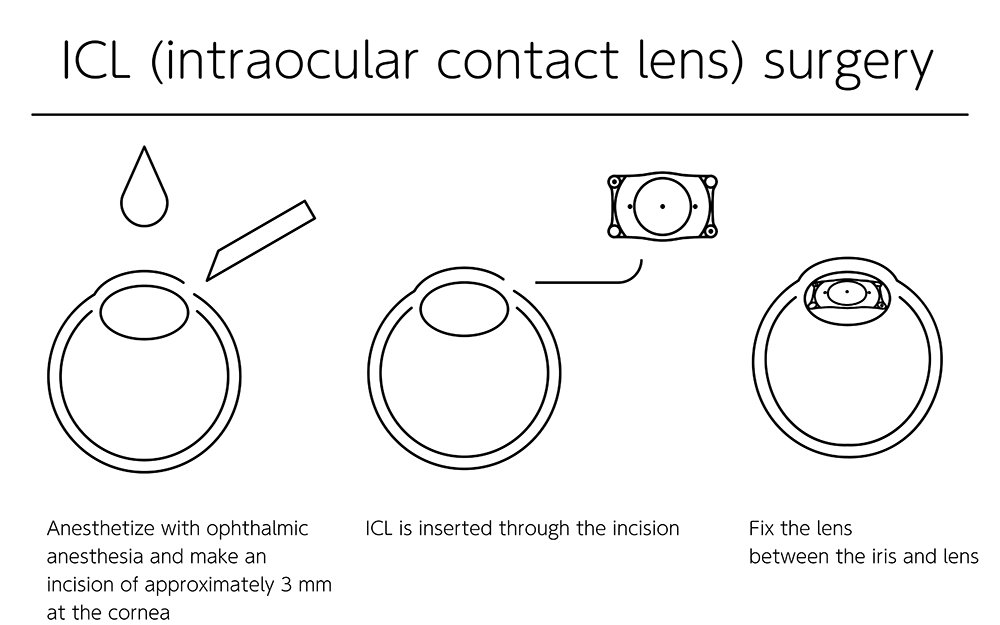
The team will dilate your eyes and numb them with anaesthetic drops. Dr Almousa creates a tiny keyhole incision (2-3mm) at your cornea’s edge. The folded ICL goes through this opening with a specialised delivery device and sits behind your iris but in front of your natural lens. Both eyes take about 15-30 minutes. The small incision heals naturally without stitches.
Post-surgery care and follow-up visits
A protective shield guards your eye against accidental rubbing. You’ll get antibiotic and anti-inflammatory eye drops to use for about two weeks. Dr Almousa schedules check-ups the next day, after one week, and at three months. These visits help monitor intraocular pressure and ensure proper healing.
Expected recovery timeline
Your vision should improve within 24-48 hours after surgery. The full visual improvement takes 7-10 days. Research shows that 98.5% of patients get vision equal to or better than their previous glasses prescription within six months. You might feel mild discomfort, light sensitivity and slight grittiness early in healing, but these symptoms go away quickly. Most patients return to work after a couple of days, with full recovery taking 1-3 months.
Why Choose Dr Radwan Almousa at Precision Vision London
Your ICL procedure’s success largely depends on choosing the right surgeon. High Prescription? Secure Your Specialist ICL Consultation Today.
 Dr Almousa’s qualifications and fellowships
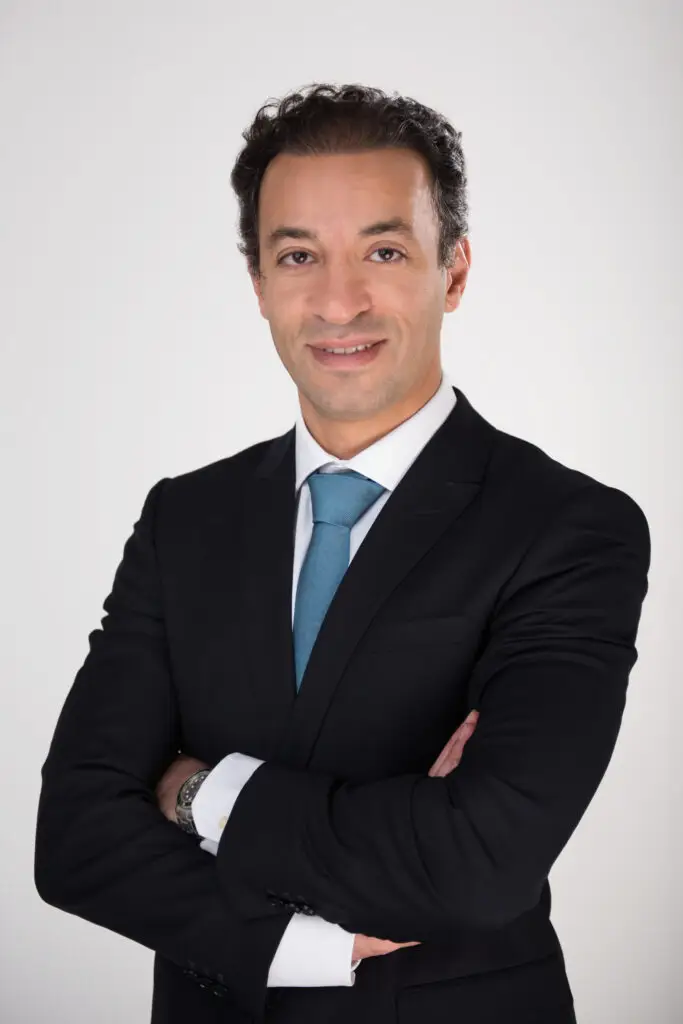
Dr Radwan Almousa brings outstanding credentials to Precision Vision London. He holds both Fellowship of the Royal College of Ophthalmologists (FRCOphth) and the prestigious Certificate in Laser and Refractive Surgery (CertLRS). His medical career started with an MD from the University of Damascus, and he built his expertise at world-class institutions. Dr Almousa completed his Oculoplastics Fellowship at Singapore’s National University Hospital, an internationally acclaimed teaching hospital. He then gained specialist expertise in cornea and refractive surgery at Queen Victoria Hospital, one of the UK’s best eye care centres.
Experience with complex eye conditions
Dr Almousa has successfully performed thousands of cataract surgeries using advanced techniques like implantable contact lenses. He created specialised treatment protocols for corneal transplantation and ocular inflammatory diseases. He now serves as a consultant ophthalmologist at prestigious institutions. His deep knowledge of anterior segment diseases helps him deliver state-of-the-art treatments that enhance vision quality.
Patient-first approach and multilingual care
Communication is the lifeblood of Dr Almousa’s practice. His fluency in English and Arabic, along with advanced French proficiency, helps him connect with patients from various backgrounds. Each patient receives care tailored to their unique needs, reflecting their patient-centred philosophy. His exceptional care shows in patient reviews, with perfect 5-star ratings. Patients often praise his clear explanations and comforting demeanour.
Precision Vision London’s advanced technology
Precision Vision London treats an astigmatic hyperope with a high prescription and significant astigmatism. Their modern facilities use premium EVO Visian ICLs made of highly biocompatible Collamer material containing purified collagen. This innovative technology needs smaller incisions and manages intraocular pressure effectively during procedures. Their specialised equipment delivers optimal results even for patients with complex vision needs.
Conclusion
ICL surgery makes freedom from glasses and contact lenses possible, especially for people with high prescriptions who couldn’t get vision correction before. This breakthrough procedure gives a safe option when laser treatments aren’t right for you. Dr Radwan Almousa is one of London’s top ICL specialists at Precision Vision London. His profound expertise comes from fellowships in Cornea, Anterior Segment and Refractive Surgery. He has done thousands of successful procedures and ensures you get world-class care throughout your vision correction experience. The clinic puts patients first with clear explanations and individual-specific attention from your first visit through recovery.
EVO ICL technology has changed vision correction. Unlike laser treatments that take away corneal tissue, this method keeps your eye’s natural structure and gives better visual quality. The fact that doctors can reverse the procedure brings peace of mind to people who worry about future eye health. Results show up fast. Most patients see significant improvements within 24-48 hours after surgery. Full benefits appear within 7-10 days. You can get back to your everyday life quickly while enjoying clear vision.
The cost starts at £3,750 per eye. This investment makes sense when you think about the money spent on glasses and contact lenses over time. On top of that, waking up each morning with clear vision brings priceless benefits to many patients. A consultation with Dr Almousa at Precision Vision London could be your first step to finding out if this life-changing procedure fits your needs.
Key Takeaways
ICL surgery offers a revolutionary solution for high myopia patients who cannot undergo traditional laser eye surgery, providing immediate vision improvement with minimal recovery time.
- ICL surgery corrects prescriptions up to -18.00D through a reversible 20-minute procedure that preserves corneal tissue
- EVO ICL technology eliminates pre-operative laser requirements whilst allowing natural eye fluid flow through innovative design
- Ideal candidates are aged 21-45 with stable prescriptions, thin corneas, or extreme myopia unsuitable for laser treatment
- Most patients achieve spectacle independence within 24-48 hours, with full recovery taking just 7-10 days
- Dr. Radwan Almousa’s specialised fellowships and thousands of procedures make him London’s leading ICL specialist
The procedure’s reversibility and biocompatible collagen material provide long-term safety, making ICL an excellent investment for those seeking permanent freedom from glasses and contact lenses.
FAQs
Q1. What is the typical cost of ICL surgery in London? ICL surgery costs typically start from £3,750 per eye in London. This price usually includes consultations, diagnostic tests, the surgery itself, and follow-up care.
Q2. How does ICL surgery differ from traditional laser eye surgery for high myopia? ICL surgery involves implanting a soft, biocompatible lens inside the eye, making it ideal for high myopia up to -20.00 diopters. Unlike laser surgery, ICL preserves corneal tissue and is reversible, offering a solution for those with very high prescriptions or thin corneas.
Q3. What is the recovery time for ICL surgery? Most patients notice improved vision within 24-48 hours after ICL surgery. Full visual improvement typically occurs within 7-10 days, with complete recovery taking 1-3 months.
Q4. Who is an ideal candidate for ICL surgery? Ideal candidates for ICL surgery are typically between 21 and 45 years old with a stable prescription. It’s particularly suitable for those with high myopia, thin corneas, or dry eyes that make them unsuitable for laser eye surgery.
Q5. What are the advantages of choosing Dr Radwan Almousa for ICL surgery in London? Dr Almousa is a highly qualified ophthalmologist with specialised training in cornea and refractive surgery. He has extensive experience with complex eye conditions, offers multilingual care, and utilises advanced technology at Precision Vision London, making him one of the leading ICL specialists in the city.