Laser eye surgery has been around since 1989 – that’s over 25 years of helping people see better. British clinics now perform about 100,000 procedures each year, helping people break free from glasses and contact lenses. The results are remarkable, and the procedure is quick. Each eye takes just 5 minutes to treat with fantastic precision. LASIK surgery leads the way as the preferred choice, making up more than 95% of all procedures. Complications are infrequent – less than 1% of cases have any issues. Most patients see better right away and get 20/20 vision within 30 minutes after surgery.
Our expert surgeons at Precision Vision London use cutting-edge technology and give personal care to each patient. This detailed guide will show you what happens during laser eye surgery. You’ll learn about different techniques and what to expect while recovering. We’ll also clear up common myths to help you decide if this life-changing procedure is correct for you.

How Laser Eye Surgery Reshapes the Cornea
The cornea works as the eye’s primary focusing mechanism. It provides 65-75% of the eye’s total focusing power. Laser eye surgery works well because of how this transparent dome functions.
Role of the cornea in focusing light
The cornea is your eye’s clear, dome-shaped front surface. It bends incoming light onto the lens, which focuses it onto the retina. The cornea adds about 40-44 dioptres of refractive power and acts as the eye’s primary optical lens. This structure must keep its exact shape to focus light correctly on the retina, given its refractive index of 1.376.
Vision problems happen when the cornea’s shape stops proper focusing:
- Short-sighted (myopic) people have corneas that curve too much
- Long-sighted (hyperopic) people have corneas that appear too flat
- People with astigmatism have irregularly shaped corneas instead of perfectly round ones
Excimer laser precision in stromal reshaping
The excimer laser makes eye surgery possible. This ultraviolet laser uses photoablative decomposition to break molecular bonds in corneal tissue without damaging nearby areas. Surgeons can remove tiny amounts of tissue with fantastic precision. The laser targets the corneal stroma, which makes up 80-85% of the cornea’s thickness. The stroma contains parallel bundles of collagen fibres arranged in 200-250 distinct lamellae. Reshaping this layer changes how the cornea focuses light forever.

Permanent changes to corneal curvature
Laser eye surgery creates lasting vision correction because the removed tissue doesn’t grow back. The procedure flattens the central cornea to fix short-sightedness, makes it steeper for long-sightedness, or smooths uneven areas for astigmatism. Doctors calculate curvature changes before surgery using detailed corneal topography maps. This helps remove the right amount of tissue, just microns thick, to achieve perfect focusing power. Research shows the corneal curvature substantially flattens right after laser treatment. It gets slightly steeper during healing over the next few months. All the same, the fundamental change lasts forever, which explains why laser eye surgery gives permanent vision correction rather than temporary improvement.
Understanding LASIK, LASEK, and SMILE Techniques
Laser eye surgery now includes several techniques that correct vision in unique ways. A clear understanding of these methods shows how surgeons achieve such impressive results.
LASIK: Dual-laser flap and reshape method
LASIK (Laser-Assisted In Situ Keratomileusis) stands as the most widely performed laser eye procedure worldwide. The technique uses two different lasers:
- A femtosecond laser first creates a thin flap in the cornea
- An excimer laser then reshapes the underlying corneal tissue
- The surgeon places the flap back, which heals naturally without stitches
You’ll spend just 15-30 minutes for the complete LASIK procedure. Most patients see clearly within 24-48 hours and feel minimal discomfort. On top of that, it works even better with Wavefront technology that tailors the correction to your eye’s unique structure.
LASEK/PRK: Surface ablation without flap
LASEK (Laser-Assisted Sub-Epithelial Keratectomy) or PRK (Photorefractive Keratectomy) serves as a practical option for patients with thinner corneas. These surface procedures differ from LASIK:
- The surgeon gently removes or repositions the corneal surface layer (epithelium)
- The excimer laser treats the exposed cornea directly
- The epithelium heals naturally or gets repositioned
Vision recovery takes longer than LASIK, usually 1-4 weeks, but these techniques deliver similar long-term results. LASEK/PRK works best, especially when you have thin corneas or face a higher risk of trauma, like contact sports players.

SMILE: Minimally invasive lenticule extraction
SMILE (Small Incision Lenticule Extraction), introduced in 2011, represents the newest breakthrough in laser vision correction. This keyhole technique works differently:
- A femtosecond laser creates a small disc of tissue (lenticule) inside the cornea
- The surgeon removes this lenticule through a tiny 3mm incision
- The cornea reshapes without creating a flap
SMILE takes just 10-20 minutes and brings several benefits: stronger corneal structure, lower dry eye risk, and excellent results for short-sightedness and astigmatism. Athletes particularly prefer SMILE because vision improves right after treatment and gets better over time.
Common Misconceptions About Laser Eye Surgery
People often have wrong ideas about laser eye surgery despite its proven track record. Let’s get into the facts behind these common concerns.
Does laser eye surgery hurt?
The procedure itself is painless. Your surgeon applies anaesthetic eye drops to numb your eye’s surface thoroughly. You might feel quick pressure—like wearing tight swimming goggles, that lasts about 30-40 seconds. LASIK patients feel mild discomfort for 4-6 hours after surgery, which feels like wearing uncomfortable contact lenses. This temporary feeling goes away by the next day.
Can it treat astigmatism?
Absolutely. Laser eye surgery corrects astigmatism by reshaping your cornea’s irregular curvature. More importantly, procedures like LASIK have impressive success rates that help treat this condition, and most patients achieve 20/20 vision or better afterwards. The technology reshapes the cornea precisely so light focuses properly on the retina.
Is the whole procedure done by laser?
No. Your surgeon applies anaesthetic eye drops before using laser technology for the corrective reshaping. The procedure also uses eye-tracking systems that follow any eye movement, and a comfortable lid holder stops you from blinking.
Is it riskier than contact lenses?
Contact lens wear poses higher infection risks than laser surgery. Laser eye surgery has a complication rate below 1% and remains one of the safest elective procedures available.
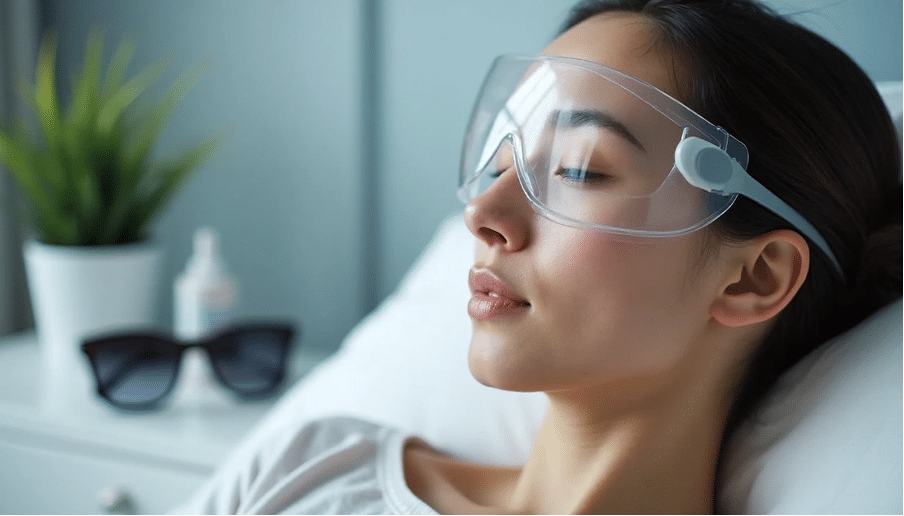
Recovery Timeline and Long-Term Results
Your recovery after laser eye surgery happens in distinct phases. Each phase shows clear improvements that help you track your healing progress.
First 24 hours: vision clarity and discomfort
Right after your procedure, you’ll notice some blurriness and mild discomfort. Patients often feel a scratchy or burning sensation. Your vision starts getting better within 3-6 hours, but you’ll need someone else to drive you home. Make sure to rest your eyes and stay away from screens while using your prescribed eye drops. Most LASIK patients can drive the next day, though they might feel sensitive to light.
1 week: healing and activity resumption
Your vision gets better with each passing day during the first week. Simple daily tasks become comfortable again by day 2-3. LASIK and SMILE patients usually head back to work right after their first checkup. LASEK patients need a whole week off. Keep using those lubricating drops and shield your eyes from dust and smoke. Swimming remains off-limits during this time.
3 months: vision stabilisation
Vision becomes stable between 3 and 6 months. This means no more fluctuations and consistent clarity in your eyesight. Your surgeon will check on your progress several times during this vital phase. The first month brings 90-95% of optimal vision, followed by subtle improvements. Stable vision lets you handle all daily activities with reliable eyesight.
Longevity of results and age-related changes
Laser eye surgery gives most patients lasting freedom from glasses and contacts. Natural ageing still affects your eyes. Age-related conditions like presbyopia develop regardless of the surgical procedures you’ve had. These changes come from normal ageing, not from your treatment wearing off. Sometimes enhancement procedures help if your prescription changes significantly.

Conclusion
Laser eye surgery is one of the most remarkable state-of-the-art medical advances in the last three decades. It gives people freedom from glasses and contact lenses by reshaping their corneas with precision. In this piece, you’ve learned how your cornea works as your eye’s primary focusing mechanism. Different surgical techniques—LASIK, LASEK/PRK, and SMILE, tackle various vision problems with exceptional accuracy.
The technology keeps getting better. Modern treatments take just minutes but deliver outstanding results. Studies show that complications occur in less than 1% of cases. This makes laser eye surgery safer than wearing contact lenses long-term. Most patients can drive within 24 hours after LASIK, though it takes 3-6 months for vision to stabilise fully. Numbing eye drops make the procedure painless. Patients feel only mild discomfort while they recover. The surgery works well for various conditions, including astigmatism. Most patients’ vision improves to 20/20 or better afterwards.
Our expert surgeons at Precision Vision London blend advanced laser technology with personal care. This ensures the best results for your eye’s unique structure. We create each treatment plan based on your vision needs, corneal shape, and lifestyle. This whole approach explains why our patients get excellent results and recover quickly. Your cornea’s new shape stays permanent, even though age-related changes might still happen later. Laser eye surgery gives a lasting solution that changes daily life for thousands of UK patients yearly. The sort of thing I love about clearer vision starts with knowing your options. A good talk with experienced specialists will help you think over whether laser eye surgery is right for you. The right surgical team can guide you through this life-changing procedure.
Key Takeaways
Understanding how laser eye surgery works reveals why it’s become one of the safest and most effective vision correction procedures available today.
- Laser eye surgery permanently reshapes the cornea using precise excimer lasers, correcting vision by altering how light focuses on the retina
- Three main techniques exist: LASIK (flap creation), LASEK/PRK (surface treatment), and SMILE (keyhole extraction), each suited to different patient needs
- The procedure is painless with anaesthetic drops, takes just 5 minutes per eye, and has complication rates below 1%
- Most patients achieve driving-standard vision within 24 hours after LASIK, with complete stabilisation occurring within 3-6 months
- Recovery involves mild discomfort for 4-6 hours post-surgery, gradual vision improvement over the first week, and long-term freedom from glasses
The technology’s precision and safety record make laser eye surgery a reliable solution for myopia, hyperopia, and astigmatism, offering permanent vision correction that transforms daily life for thousands of patients annually.
FAQs
Q1. Is laser eye surgery painful? The procedure itself is painless due to anaesthetic eye drops. Patients may feel slight pressure during the surgery, similar to wearing tight swimming goggles. After LASIK, mild discomfort lasting 4-6 hours is common, but this typically resolves by the next day.
Q2. How long does it take to recover from laser eye surgery? Most patients achieve driving-standard vision within 24 hours after LASIK. Vision continues to improve daily in the first week. Full vision stabilisation typically occurs between 3-6 months post-surgery, with 90-95% of optimal vision achieved within the first month.
Q3. Can laser eye surgery correct astigmatism? Yes, laser eye surgery effectively corrects astigmatism by reshaping the cornea’s irregular curvature. Most patients with astigmatism achieve 20/20 vision or better after the procedure.
Q4. Are the results of laser eye surgery permanent? The fundamental correction to your corneal shape is permanent. However, natural age-related changes can still occur over time, such as presbyopia. These changes reflect normal ageing rather than treatment regression.
Q5. How safe is laser eye surgery compared to wearing contact lenses? Laser eye surgery is considered safer than long-term contact lens wear. The procedure has a complication rate below 1%, making it one of the safest elective procedures available. In contrast, contact lens wear poses higher infection risks over time.