The perfect time to get preventative laser eye surgery in London is in your 30s. Your eye prescription has likely stabilised by this age, which makes you an excellent candidate for LASIK. Most suitable candidates haven’t seen substantial changes in their lens prescription over the last two years. Laser eye surgery in your 30s delivers results that last. The effects typically continue for more than a decade, and 95% of patients report satisfaction with their vision correction years after the procedure. LASIK procedures done in your 30s rarely need repeat treatment, unlike those done in your early 20s, especially with higher levels of short-sightedness.
On top of that, it makes financial sense to get preventative laser eye surgery during this decade. While glasses and contact lenses can cost substantially more over time, LASIK is a one-time solution that gives you extended freedom from spectacles, whether you’re playing sports or socialising. More London professionals now welcome this “tweakment,” and your 30s might be the ideal time to think over this life-changing procedure.

Why more London professionals are choosing LASIK at 30
London’s ever-changing professional world has created a new health trend. Busy professionals in their 30s now choose preventative laser eye surgery more than ever. This change shows how people view personal care and career growth differently.
Lifestyle demands of modern professionals
London’s professional life creates unique visual challenges. The daily grind of managing career duties, family life, and social activities makes glasses or contacts a real burden. Screen time combined with contact lenses leads to eye strain and discomfort for people who work long hours with digital devices. Your career growth in competitive fields depends on how well you perform and present yourself. Vision without glasses creates new career opportunities that eyewear once limited. Many professionals feel more confident when they don’t need glasses, especially in workplaces where first impressions matter.

The rise of ‘tweakments’ and preventative care
Under-35s have embraced preventative aesthetic procedures 20% more each year in the last five years. People now think differently about personal care. They take action before problems arise rather than reacting to them. Thinking of laser eye surgery as a preventative step? Book a personalised consultation and find out if early vision correction is correct for you. Laser eye surgery has evolved like other popular ‘tweakments.’ The focus now lies on subtle, natural-looking improvements instead of dramatic changes. Professionals love this approach because it boosts their quality of life while keeping their natural appearance.
Why your 30s are the ideal time for laser eye surgery
Your 30s provide the perfect time to get laser vision correction. Your prescription has usually stabilised by now, which makes you a great candidate. Your body recovers faster and achieves better results because you’re still young and healthy. Money matters become easier, too. Most professionals reach financial stability in their 30s and can invest in elective procedures. This investment pays off by eliminating ongoing costs for glasses, contacts, solutions, and regular eye exams over time. The timing makes sense from a medical standpoint. You’re young enough to enjoy the benefits for decades but old enough to have stable vision. Laser eye surgery in your 30s gives you the best mix of long-term value and optimal results.
What to expect from the LASIK procedure
Learning about the LASIK trip from consultation to recovery will ease your concerns about this life-changing procedure. You should know exactly what to expect to be ready at each step.
Original consultation and eye health assessment
Your LASIK trip starts with a complete eye examination to check if you’re suitable. You’ll need to stop wearing contact lenses before the assessment—typically 3-5 days for soft lenses and up to four weeks for hard lenses. The appointment usually takes 1-2 hours. Specialists will perform corneal topography to check your eye’s shape, measure pupil size, and look for conditions like dry eye disease. These tests will give a clear picture of whether your corneas are thick and healthy enough for the procedure. Want to think about laser eye surgery as a preventative step? Book a personalised consultation to find out if early vision correction works for you.
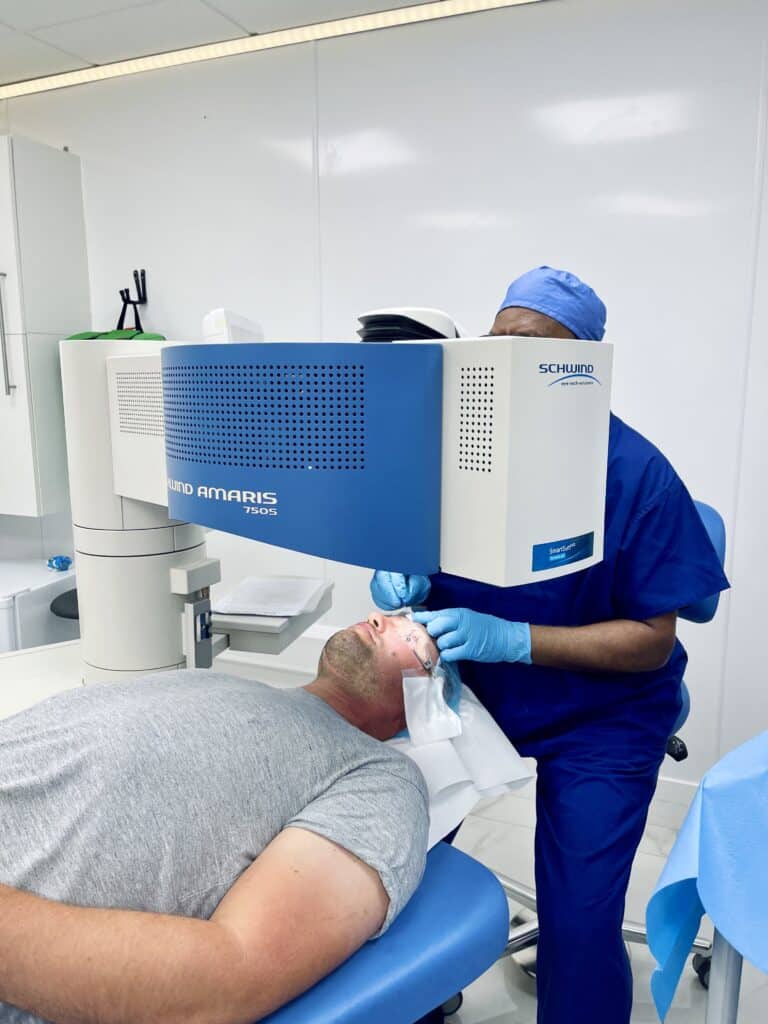
How LASIK works: step-by-step
The LASIK procedure takes about 15 minutes per eye. The surgeon will apply numbing drops and:
- Place a suction ring and eyelid speculum to keep your eye open and still
- Create a thin flap in your cornea using a femtosecond laser
- Fold back this flap to access the corneal tissue beneath
- Use an excimer laser to reshape the cornea while you focus on a light
- Reposition the flap, which begins reattaching right away
You stay awake but comfortable during the procedure. The surgeon guides you through each step.
Is laser eye surgery permanent?
LASIK reshapes your cornea permanently. Studies show that most patients keep stable vision for many years. Natural ageing processes continue, though. Most people develop presbyopia (difficulty with near vision) around age 40, whatever their LASIK history.
Recovery timeline and aftercare essentials
The first 24 hours see 80-90% of healing. You get eye drops to prevent infection, reduce inflammation, and artificial tears for comfort. Many patients drive and return to work the next day. Swimming and hot tubs should wait for at least four weeks. Contact sports need about a month’s break.
Benefits beyond vision correction
Laser eye surgery offers benefits that go way beyond better eyesight. This investment in your vision will improve your overall quality of life in many ways.
Freedom from glasses and contact lenses
Life gets better right away when you say goodbye to corrective eyewear. Your vision stays clear without glasses fogging up or contact lenses drying out. You won’t need to clean, store, or maintain any visual aids. Water sports enthusiasts and active people can now fully enjoy their activities without worrying about eyewear getting in the way.

Boost in confidence and appearance
LASIK brings remarkable psychological benefits to patients. About 95% of patients feel more confident and happier with how they look. You’ll feel more self-assured without hiding behind frames or struggling with contact lens discomfort. Your natural appearance shines through in both personal and professional settings. Making eye contact becomes easier, and you won’t worry about how glasses affect your looks anymore.
Improved performance in work and sport
Better vision without eyewear can boost your career growth. LASIK creates new opportunities if you work in fields that demand excellent vision. Athletes see significant improvements in their peripheral vision, depth perception, and reaction times. This freedom helps you perform better at work and in sports.
Financial savings over time
LASIK needs money up front, but the long-term savings make sense. Most patients recover their costs within 5-7 years compared to regular eyewear expenses. Over 20 years, glasses cost around £2,700 while contact lenses add up to nearly £9,850. The one-time LASIK cost of £3,971 proves to be a wise financial choice.
Long-term outcomes and future considerations
You need to know how long laser eye surgery lasts to make a wise choice about this investment in your vision.

How long does laser eye surgery last?
Laser eye surgery makes permanent changes to your cornea that last a lifetime. The results are impressive. Research shows 75% of patients stay within 1.0 D of their target correction even after 12 years. Most patients enjoy stable vision for 10-20 years after their procedure.
Will I need reading glasses later?
LASIK delivers lasting benefits but can’t stop presbyopia. This natural age-related condition affects near vision and usually starts between the ages of 40-45. Your eye’s natural lens becomes stiffer with age. You might need reading glasses for close-up tasks, whatever your history with laser eye surgery. The sort of thing I love about laser eye surgery is its preventative benefits. Book a personalised consultation to see if early vision correction suits you.
Can LASIK be repeated if needed?
Enhancement procedures work well in most cases, even 10-20 years after the original treatment. The numbers tell the story – 5-10% of patients opt for minor enhancements within 10-12 years. Your surgeon checks your corneal thickness and overall eye health to determine if you qualify.

Why Precision Vision London offers long-term support
Our complete aftercare programme will give a smooth healing process and the best possible outcomes. We schedule regular follow-ups to track your progress. Our specialists are available to help with concerns and suggest solutions for age-related changes.
Conclusion
Laser eye surgery in your 30s is a wise investment that can boost both your eyesight and career growth. Your vision has usually settled by this age, making it the right time to get lasting results without needing frequent updates. The math works out well, too – the original cost might look high, but you’ll save thousands of pounds compared to buying glasses and contact lenses over time.
Life becomes much easier without glasses or contacts. You won’t have to deal with foggy glasses on cold morning commutes or irritated eyes from wearing contacts too long. The benefits go beyond just convenience. Many patients feel more confident at work because their natural, clear vision helps them perform better and make a stronger impression. Laser eye surgery results last much longer than cosmetic procedures that need regular touch-ups. Your eyes will keep ageing naturally, and you might need reading glasses when presbyopia kicks in around 45. In spite of that, most London professionals find the decades of sharp distance vision worth the investment.

Any surgery needs proper planning. Precision Vision London gives complete consultations to check if you’re a good candidate. They create personalised treatment plans based on your specific vision needs. Their aftercare programme will give you the best results and help with any concerns during your recovery. This proactive approach to fixing your vision matches today’s professional outlook – taking action now leads to better results later. Whether you want to advance your career, stay active, or just see clearly without help, laser eye surgery at 30 is a choice that keeps paying off for years.
Key Takeaways
London professionals are embracing laser eye surgery in their 30s as a strategic “tweakment” that combines optimal timing with long-term benefits for career and lifestyle enhancement.
- Your 30s offer the ideal window for LASIK as prescription stability ensures lasting results, with 95% of patients satisfied years later
- The procedure pays for itself within 5-7 years compared to ongoing eyewear costs, saving thousands over two decades
- Beyond vision correction, LASIK boosts professional confidence and eliminates daily eyewear hassles for active lifestyles
- Results typically last 10-20 years, with 75% of patients maintaining excellent vision even after 12 years post-surgery
- Recovery is swift with most healing occurring within 24 hours, allowing return to work the following day
This preventative approach aligns with modern professional thinking—investing proactively in your 30s delivers decades of clear vision, enhanced confidence, and freedom from the limitations of glasses and contact lenses.
FAQs
Q1. At what age is it best to get laser eye surgery? The ideal age for laser eye surgery is typically in your 30s. By this time, your eye prescription has usually stabilised, making you an excellent candidate for long-lasting results without the need for frequent adjustments.
Q2. How long does laser eye surgery last? Laser eye surgery results are generally long-lasting. Most patients experience stable vision for 10-20 years following the procedure, with 75% remaining within 1.0 D of their targeted correction even after 12 years.
Q3. Will I still need reading glasses after laser eye surgery? While laser eye surgery corrects distance vision, it doesn’t prevent presbyopia – the age-related difficulty with near vision that typically develops around age 40-45. You may still need reading glasses for close-up tasks as you age.
Q4. How quickly can I return to work after LASIK? Recovery from LASIK is typically swift. Most healing occurs within the first 24 hours, and many patients can return to work the day after the procedure. However, it’s best to follow your surgeon’s specific advice for your situation.
Q5. Is laser eye surgery cost-effective compared to glasses and contacts? Yes, laser eye surgery can be very cost-effective in the long run. While it requires an initial investment, most patients break even within 5-7 years compared to ongoing eyewear expenses. Over 20 years, it can save thousands of pounds compared to the cumulative costs of glasses or contact lenses.