22A Harley Street London W1G 9PB

20/20 Vision vs 6/6 Vision: Understanding Perfect Eyesight Standards

20/20 Vision vs 6/6 Vision: Understanding Perfect Eyesight Standards

Ever wondered about 20/20 vision? The numbers might surprise you. Only 35% of adults naturally have 20/20 vision without any correction. Most people think of this standard as “perfect vision,” but it’s really just the baseline for normal eyesight. The term “20/20 vision” is well-known worldwide. Here in the UK, we use “6/6 vision” to mean the same thing. Some people’s vision can actually exceed these standards. To name just one example, see how some achieve 20/15 or 20/10 vision. These super-sharp eyes are rare, though – less than 1% of people have 20/10 vision.

Modern vision correction methods are a great way to get excellent results. The success rates speak for themselves: 97% of short-sighted patients see at 20/20 or better after surgery. With proper correction, about 75% of adults can achieve 20/20 vision. Precision Vision London knows how vital clear vision is to your daily life. That’s why regular eye checks help you maintain optimal eye health. This detailed guide will walk you through the differences between 20/20 and 6/6 vision standards. You’ll learn how doctors measure visual acuity, whether you can achieve better-than-standard vision, and what treatment options can help you get the best possible eyesight.

20/20 vision

What Does 20/20 Vision Mean in the UK Context?

The phrase “20/20 vision” resonates worldwide, yet UK optometrists use “6/6 vision” as their standard measurement. This variation goes beyond simple terminology and shows how different measurement systems apply to the same visual concept.

Difference Between 20/20 and 6/6 Vision

These two standards measure vision clarity in different units but mean the same thing. The main difference comes from their measuring systems. North America uses feet with 20/20 vision, while Europe and the UK use metres with 6/6 vision. Both measurements tell us what normal visual acuity looks like. Your optometrist might tell you that you have 6/6 vision. This means you can see objects clearly from 6 metres away, just like someone with standard eyesight would. The same applies to 20/20 vision – you see things from 20 feet away as clearly as the average person.

Why the UK Uses 6/6 Instead of 20/20

Britain and most European countries work with the metric system. Eye care professionals test vision at 6 metres instead of 20 feet. These distances match up well – 6 metres roughly equals 20 feet. This change happened as Britain moved from imperial to metric measurements last century. Many countries accepted new ideas about measurement, though America still uses the imperial system.

What is Meant by 20/20 Vision in Eye Tests

Eye doctors use a Snellen chart to measure visual acuity. You’ve likely seen this chart with its rows of letters that get smaller as you read down. The resulting measurement compares your vision to what’s considered normal. The measurement works like this: the first number shows how far you stand from the chart (20 feet or 6 metres), while the second tells us how far someone with normal vision could read that line. To name just one example, see a 6/12 measurement (same as 20/40) – you need to stand at 6 metres to see what others with regular vision spot from 12 metres away. A score of 6/6 or 20/20 doesn’t mean perfect eyesight – it just shows normal visual acuity. Some people actually see better than this standard. They might have 6/5 or 6/4 vision, meaning they can spot things at 6 metres that others only see clearly from 5 or 4 metres away.

How Visual Acuity is Measured Using the Snellen Chart

The Snellen chart, created by Dutch ophthalmologist Herman Snellen in 1862, remains the lifeblood tool that measures visual acuity in clinical practise. This standardised test offers a portable and quick way to assess vision. It has proven reliable for more than 170 years.

snellen eye chart

Snellen Chart Explained: 20/200 to 20/10

The classic Snellen chart displays rows of letters that get smaller from top to bottom. At the recommended distance of 6 metres (or 20 feet), letters on the “normal” acuity line create an angle of five minutes of arc. The line thickness measures one minute of arc. A single large letter, usually E, sits at the top. This represents 6/60 or 20/200 vision. The chart then moves down to smaller letters that show better visual acuity. Some people with exceptional eyesight can read lines below 6/6, which shows vision better than standard.

Visual Acuity 6/6 vs 6/12 vs 6/60

These measurements are easy to understand:

  • 6/6 (20/20): You see at 6 metres what someone with standard vision sees at 6 metres – this shows normal visual acuity
  • 6/12 (20/40): You must be at 6 metres to see what someone with standard vision sees at 12 metres – this shows half the normal acuity
  • 6/60 (20/200): You need to be at 6 metres to see what someone with standard vision sees from 60 metres – often the threshold for legal blindness

Driving Standards and Legal Blindness Thresholds

UK driving regulations demand a visual acuity of at least 6/12 on the Snellen scale (with correction if needed) using both eyes together. Lorry and bus drivers face stricter standards. They need at least 6/7.5 in their best eye and at least 6/60 in the other eye. Driving with eyesight below these standards breaks the law and could void motor insurance. Legal blindness certification in the UK as “severely sight impaired” (blind) requires specific conditions. These include visual acuity less than 3/60 with whole visual field, between 3/60 and 6/60 with severe field reduction, or 6/60 with substantially reduced lower field vision.

Is There Vision Better Than 20/20?

Most people think 20/20 (or 6/6) vision is perfect eyesight. In fact, many people have a vision that goes beyond this standard measure.

What is Better Than 20/20 Vision: 6/5 and 6/4

Visual acuity can exceed the standard 6/6 measurement. Some people have 6/5 vision, which means they can identify objects at 6 metres that someone with normal vision needs to be 5 metres away to see clearly. The results get even more impressive with 6/4 vision. These people can notice details at 6 metres, while others need to be just 4 metres away to see the same thing. People with healthy eyes usually have vision that ranges from slightly better than average (6/5 or 6/4) to somewhat worse (6/7.5).

Eagle Vision and Human Limits

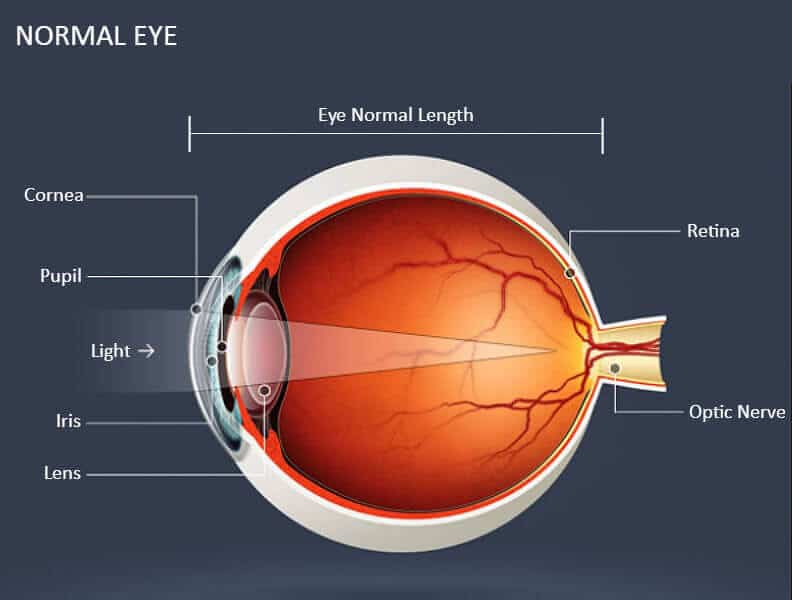
Birds of prey have excellent visual abilities that put humans to shame. Eagles have visual acuity around 20/5 or 20/4, which lets them see four to five times further than humans. Their exceptional eyesight comes from their unique retinal structure with tightly packed cones and a deeper fovea. Human eyes have physical limits that prevent us from matching eagle vision. Our cornea, lens, iris and retina’s structure limits our best possible vision to about 20/10 or 20/8.

Is 6/5 Vision Better Than 20/20?

The answer is yes – 6/5 vision beats the standard 6/6 measurement. This sharper eyesight allows better detail recognition at a distance. The best human vision ever recorded reaches about 20/10, which means seeing clearly from 20 feet what normal vision requires 10 feet to see. A person’s vision at 6/5 is roughly 20% sharper than the standard baseline.

How to Achieve or Maintain 6/6 Vision

Good eyesight depends on both expert care and personal attention. You need specific medical procedures to achieve perfect 6/6 vision based on your visual needs.

Laser Eye Surgery and Visual Outcomes

Laser eye correction delivers impressive results for most patients. Studies show that 98.5% of patients report satisfaction with their surgery results. Clinical data show that 97% of short-sighted patients get 20/20 vision or better after surgery. The procedure has proven to be a soaring success, with safety rates hitting 99.6% according to complete reviews.

LASIK eye surgery process

Lens Replacement Surgery for Age-Related Vision Loss

People develop presbyopia in their early to mid-40s, which makes it hard to focus on nearby objects. Lens replacement surgery helps by putting an artificial lens in place of your natural one. Most patients can get back to their routine within days after this 20-30 minute procedure. On top of that, it stops cataracts from forming in the treated eye.

Lens Replacement Surgery

Cataract Surgery and Restoring Visual Acuity

Doctors can only treat cataracts through surgery. Research shows that 90% of patients get satisfactory vision (best-corrected visual acuity of 6/12 or better) after the procedure. The NHS provides this 20-45 minute operation as a day case, and patients bounce back quickly.

Cataract Surgery

Importance of Regular Eye Exams

Regular eye checks are vital since many eye conditions show no early warning signs. The NHS suggests eye tests at least every two years. These tests can spot over 270 health conditions throughout the body, including diabetes and high blood pressure.

Lifestyle Factors That Support Eye Health

Simple daily habits can protect your vision:

  • Eat nutrient-rich foods (especially leafy greens and oily fish)
  • Exercise to boost blood flow to eye tissues
  • Take screen breaks using the 20-20-20 rule
  • Wear quality sunglasses to block UV rays
  • Get enough water and sleep

why choose us precision vision London

Conclusion

Normal eyesight isn’t what most people think it is. This piece explains how 6/6 vision is just the UK’s baseline standard, not the peak of visual sharpness. Some lucky people can see even better, reaching 6/5 or 6/4 vision. Our specialists at Precision Vision London use the Snellen chart to measure each patient’s vision accurately. These precise measurements help us create custom treatment plans to improve or maintain your eyesight.

Getting to 6/6 vision or better is achievable with our advanced procedures. Laser eye surgery enables 97% of short-sighted patients to reach 6/6 vision or better. Our lens replacement procedures work well for age-related changes, and cataract surgeries give 90% of patients clear vision again. Regular eye check-ups are the lifeblood of good vision health. Our expert ophthalmologists spot problems early before your vision quality suffers. A healthy lifestyle also helps protect your eyes over time.

Precision Vision London uses advanced technology and personalised care plans to deliver outstanding results. Our team of specialists is here to support your experience toward better eye health, whether you have 6/6 vision now or want to achieve it. Clear vision makes everything in daily life better, it deserves professional care and attention.

Key Takeaways

Understanding vision standards helps you make informed decisions about your eye health and available treatment options.

  • 20/20 and 6/6 vision are identical standards using different units, feet versus metres—both representing normal baseline eyesight, not perfect vision.
  • Vision better than 6/6 exists: some people achieve 6/5 or 6/4 acuity, seeing details at greater distances than those with standard vision.
  • Modern laser eye surgery achieves remarkable results, with 97% of short-sighted patients reaching 6/6 vision or better after treatment.
  • Regular eye examinations every two years are essential, as they can detect over 270 health conditions before symptoms appear.
  • UK driving requires a minimum 6/12 vision with both eyes, whilst legal blindness typically begins at a visual acuity below 3/60.

Remember that 6/6 vision represents a starting point rather than an endpoint, with proper care and modern treatments, many people can achieve and maintain excellent eyesight throughout their lives.

FAQs

Q1. What is considered perfect vision in the UK? In the UK, 6/6 vision is considered the standard for normal visual acuity. This is equivalent to 20/20 vision in countries using the imperial system. However, it’s important to note that some individuals can achieve even better vision, such as 6/5 or 6/4.

Q2. How does the Snellen chart measure visual acuity? The Snellen chart uses rows of letters that decrease in size from top to bottom. During an eye test, you read the smallest line of letters you can see clearly from a standard distance of 6 metres. Your visual acuity is then expressed as a fraction, such as 6/6 or 6/12.

Q3. Can laser eye surgery improve vision to better than 6/6? Yes, laser eye surgery can often improve vision beyond the standard 6/6. Studies show that 97% of short-sighted patients achieve 20/20 (6/6) vision or better after surgery. Some individuals may even attain 6/5 or 6/4 vision following the procedure.

Q4. What are the visual acuity requirements for driving in the UK? UK driving regulations require a visual acuity of at least 6/12 measured on the Snellen scale, using both eyes together. This standard can be met with or without corrective lenses. For lorry and bus drivers, the requirements are more stringent, necessitating at least 6/7.5 in the best eye.

Q5. How often should I have my eyes examined? The NHS recommends having an eye examination at least every two years. Regular check-ups are crucial as many eye conditions develop without noticeable symptoms. These examinations can detect over 270 systemic health conditions, including diabetes and hypertension, making them an essential part of overall health maintenance.

Authors & Reviewer
  • : Author

    Hi, I'm Olivia, a passionate writer specialising in eye care, vision health, and the latest advancements in optometry. I strive to craft informative and engaging articles that help readers make informed decisions about their eye health. With a keen eye for detail and a commitment to delivering accurate, research-backed content, I aim to educate and inspire through every piece I write.

  • : Reviewer

    Dr. CT Pillai is a globally recognised ophthalmologist with over 30 years of experience, specialising in refractive surgery and general ophthalmology. Renowned for performing over 50,000 successful laser procedures.

Book Your Appointment Now