Are you trying to decide between lens replacement surgery and laser eye surgery in your 40s? Your 40th birthday typically brings presbyopia – a natural condition where your crystalline lens becomes stiff and struggles to focus on nearby objects. Both procedures can reduce your need for glasses or contact lenses, but they work differently for people over 40. Laser eye surgery can still help after forty but does not treat the ageing lens, while lens replacement surgery (RLE) tackles age-related vision changes by putting an artificial intraocular lens (IOL) in place of your natural one.
The choice between laser eye surgery and lens replacement becomes crucial in your 40s. RLE surgery corrects your prescription, and because the natural lens is removed, a cataract cannot form in it later. You get two benefits from a single procedure. Many patients say they’re satisfied with their vision after RLE surgery. Trifocal lenses help you see clearly during various activities like computer work and reading without needing glasses. Let us help you understand the benefits of lens replacement compared to laser surgery, so you can choose the best option for your vision as you move through your 40s and beyond.
Treats Presbyopia at Its Root, Not Just the Symptoms
Presbyopia develops when your eye’s natural lens stiffens with age. Most people notice these changes in their early to mid-40s. The way these procedures address this condition shows why lens replacement may suit some people over 40.
Lens replacement targets the ageing lens directly
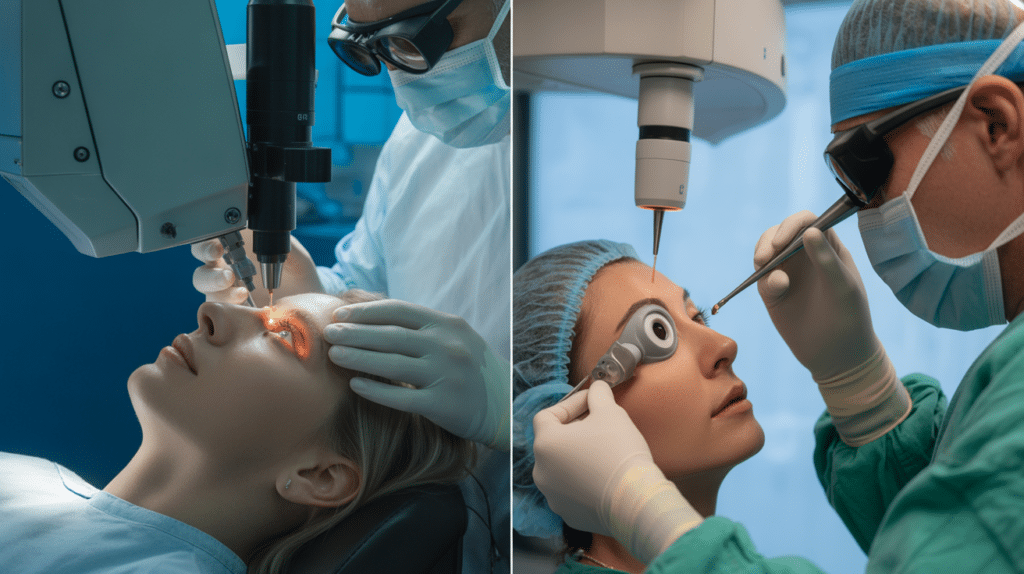
Lens replacement surgery (refractive lens exchange) tackles presbyopia head-on. Surgeons remove the stiffened natural lens and replace it with an artificial intraocular lens (IOL). This method fixes the biggest problem of presbyopia – the hardened lens that can’t change shape to focus on close objects. The surgery takes just 15-30 minutes and needs only tiny incisions without stitches. On top of that, it offers a long-term solution since these IOLs are designed to stay in your eyes for life.
Laser eye surgery reshapes the cornea but leaves the lens untouched
Laser eye surgery works differently by changing the cornea’s shape – the outer window of your eye. The procedure works well to fix short-sightedness, long-sightedness, and astigmatism. However, laser procedures can’t stop your eye’s lens from getting older or losing its flexibility. The root cause of presbyopia stays untreated. PRESBYOND creates a “blend zone” for near and distance vision, but it ends up working around the problem instead of fixing it.
Why this matters for people in their 40s
This difference becomes crucial when you hit your 40s. Lens replacement gives you a detailed long-term solution by fixing the root cause. Because the natural lens is removed, a cataract cannot develop in it later in life. You solve two problems with one surgery. The multifocal or extended depth of focus (EDOF) lenses help many patients over 40 see clearly at all distances. This solution works better especially when you have presbyopia that gets worse over time. Cornea-based procedures don’t deal very well with this reality. Some surgeons regard lens replacement as a definitive treatment for presbyopia.
Offers Clear Vision at All Distances with One Procedure
Life today needs uninterrupted vision at multiple distances. People read text messages, work on computers and drive. Lens replacement surgery stands out by providing detailed vision correction in a single procedure.
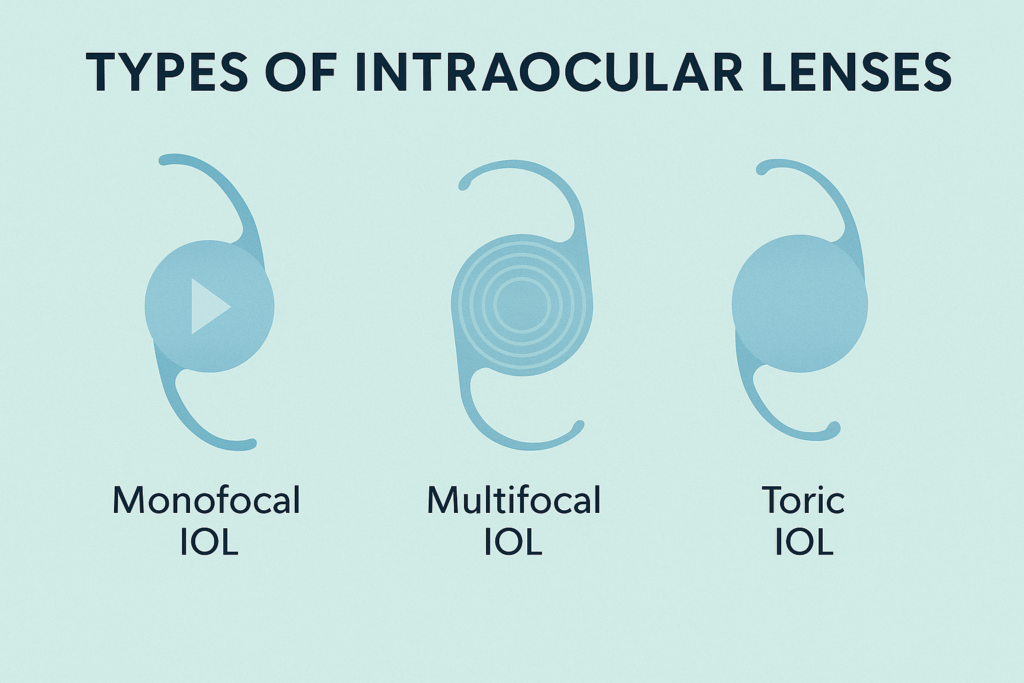
Trifocal and EDOF lenses: distance, intermediate, and near
Trifocal intraocular lenses (IOLs) give clear vision at three distinct focal points. These advanced lenses add a vital intermediate zone designed for computer use, dashboards, and arm’s length activities. Extended Depth of Focus (EDOF) lenses create a continuous range of vision from distance to intermediate. They cause fewer visual disturbances like halos or glare compared to traditional multifocal designs. Both options give much independence from glasses for everyday tasks.
Avoiding monovision compromises common in LASIK
Traditional laser approaches often use monovision to correct one eye for distance and another for near vision. This technique works for some but creates visual compromises. Patients now need only “mini-monovision” targets of -0.75D to -1.25D instead of the -2.5D used before. Lens replacement with multifocal options lets both eyes see clearly at multiple distances at the same time. Your binocular vision and depth perception stay preserved, although your brain still needs time to adapt to multifocal lenses.
Custom lens selection based on lifestyle needs
Each person’s ideal lens choice varies based on their individual needs. Active, digitally involved people benefit from trifocal lenses that provide smooth transitions between all visual ranges. EDOF lenses might work better for those who want intermediate and distance vision with fewer optical side effects. Your specific visual tasks matter—whether you do office work, outdoor activities, or read often. No single lens works for everyone, so getting a full lifestyle picture becomes vital for the best outcomes.
Prevents Cataracts and Reduces Future Eye Surgeries
Lens replacement has a big advantage over laser eye surgery because a cataract cannot form in the natural lens once it has been removed. This matters because cataracts affect millions of people who are over 40 years old, and lens replacement surgery gives them a way to stay ahead of this issue.
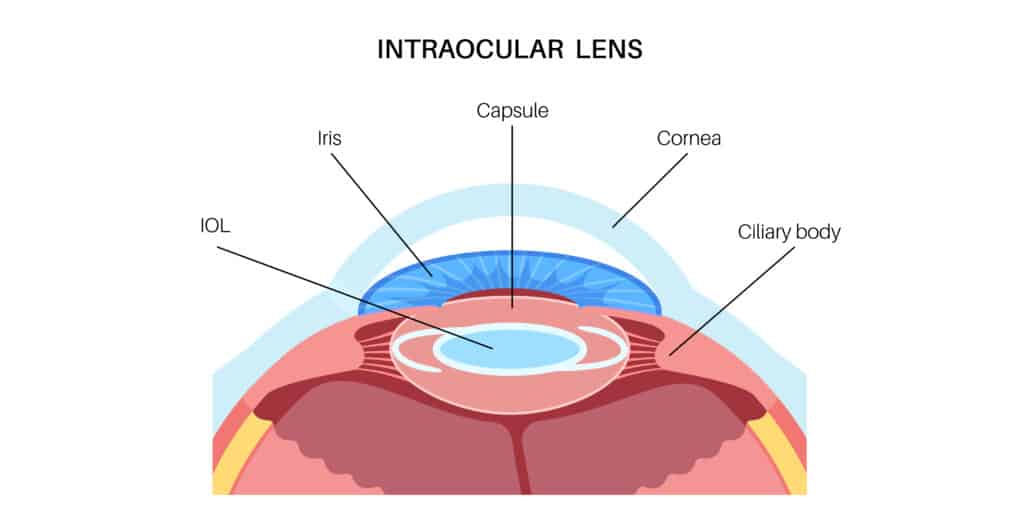
Lens replacement removes the ageing lens permanently
The surgeon removes the eye’s natural lens and puts in an artificial intraocular lens (IOL) during the replacement surgery. These artificial lenses last throughout your lifetime and keep providing vision correction. Laser eye surgery just reshapes the cornea, but lens replacement tackles the natural lens – the part that ages most.
Eliminates the need for cataract surgery later in life
A cataract cannot develop in your natural lens once it has been replaced with an artificial one. This is a big deal as it means that cataracts rank among the top causes of vision loss in Americans over 40, and they affect more than 24 million people. So you won’t need cataract surgery on that lens as you get older, although the lens capsule can become cloudy and may need laser treatment.
Long-term clarity and fewer interventions
The artificial lenses used in replacement surgery stay clear and don’t turn yellow over time. Your vision usually remains stable, although some patients later need a laser procedure for capsule clouding. The initial cost might be higher than laser surgery, but lens replacement becomes budget-friendly over time because you won’t need cataract surgery later.
Delivers Stable, Long-Lasting Results with Minimal Regression
Vision correction stability becomes crucial when you reach your 40s. Lens replacement surgery is designed to give long-lasting results.
IOLs do not degrade or yellow over time
Your artificial intraocular lens will stay with you for life after lens replacement surgery. These premium implants keep their clarity without yellowing or changing their refractive properties as time passes. This stability means your vision usually stays consistent, although further treatment is occasionally needed.
Laser correction may regress as the lens continues to age
Laser eye procedures tell a different story when it comes to long-term results. Studies show that 66.7% of LASIK patients developed myopia greater than 1 diopter within ten years after surgery. Patients experienced an average myopic change of -1.09D during follow-up. This regression happens because laser surgery reshapes the cornea but leaves your natural ageing lens untouched, which lets presbyopia continue progressing.
Improved contrast and colour perception post-RLE
Lens replacement surgery improves your visual quality beyond just stability. You’ll likely notice better contrast sensitivity and colour perception once your yellowing natural lens is removed. Research shows that intraocular lens procedures give better contrast sensitivity than excimer laser correction, especially with moderate to higher prescriptions. Patients consistently report higher satisfaction scores on preference questionnaires because of these improvements.
Comparison Table
| Aspect | Lens Replacement Surgery | Laser Eye Surgery |
|---|---|---|
| Treatment Approach | Removes and replaces natural lens with artificial IOL | Reshapes the cornea, leaves natural lens intact |
| Presbyopia Treatment | Treats why it happens by replacing stiffened lens | Corrects focus at the cornea; does not treat the ageing lens |
| Procedure Duration | 15-30 minutes | 15 mins - 20 mins |
| Vision Range | Trifocal/EDOF lenses aim to give vision at several distances; glasses may still be needed | Often requires monovision compromise |
| Cataract Prevention | Cataract cannot form in the removed natural lens | No effect on cataract development |
| Long-term Stability | Long-term solution; the lens implant is designed not to degrade | Prescription can change over time as the eye ages |
| Visual Quality | Improved contrast and colour perception | Results depend on prescription and corneal measurements |
| Patient Satisfaction | High reported satisfaction | Not mentioned |
| Lens Longevity | Designed to last lifetime, no degradation or yellowing | N/A |
| Computer/Reading Vision | Specifically addresses with trifocal lenses | Limited success with near vision tasks |
Conclusion
Lens replacement surgery can offer advantages over laser eye surgery for some people in their 40s. The procedure tackles presbyopia head-on by replacing the hardened natural lens instead of just reshaping the cornea. This treats the root cause rather than symptoms. Modern trifocal and EDOF lenses aim to give clear vision at a range of distances. Many patients see clearly – from text messages to road signs – without the drawbacks that often come with monovision laser approaches.
The best part about lens replacement is its preventative benefit. You won’t need cataract surgery on the natural lens later in life because it has been removed. The price tag might be higher than laser options at first, but it’s worth it when you think about the cost of future cataract procedures. Results from lens replacement stay stable over time. Laser correction can change as years pass – one study found around two-thirds of patients had vision changes within 10 years. Your artificial intraocular lenses are designed to keep their clarity and focusing power for life. Many patients say their contrast sensitivity and colour vision are better after the surgery.
Choosing between these vision correction options depends on your eyes and lifestyle. The complete benefits of lens replacement work really well for anyone in their 40s who has presbyopia. Many patients report being satisfied with their results. Eye surgeons can match the right lens technology to your daily activities and vision needs.
Starting a journey to freedom from glasses needs careful planning. The right procedure can make a real difference to daily life, and many patients rely on reading glasses much less. Lens replacement stands out as a smart investment for people in their 40s. It addresses presbyopia now and removes the lens in which a cataract would otherwise form later.
Key Takeaways
For people in their 40s facing presbyopia, lens replacement surgery offers distinct advantages over laser eye surgery by addressing age-related vision changes more comprehensively:
- Lens replacement treats presbyopia at its root by replacing the stiffened natural lens, whilst laser surgery only reshapes the cornea and leaves the ageing lens untouched.
- One procedure provides clear vision at all distances through trifocal or EDOF lenses, eliminating the visual compromises often required with laser monovision approaches.
- Future cataract surgery becomes unnecessary as lens replacement removes the natural lens permanently, so a cataract cannot develop in it later in life.
- Results remain stable long-term with artificial lenses designed to maintain clarity long term, whilst laser correction may regress in 67% of patients within ten years.
- Reported patient satisfaction is high, with many experiencing improved contrast sensitivity and colour perception compared to their natural ageing lenses.
The procedure essentially solves two problems with one surgery correcting current presbyopia whilst preventing future cataracts making it a particularly valuable investment for those entering their 40s who want lasting visual independence without multiple interventions.
FAQs
Q1. At what age is lens replacement surgery most beneficial? Lens replacement surgery is typically most beneficial for individuals aged 40 and above. This is because presbyopia, the age-related loss of near vision, usually begins around this time. The procedure can effectively address presbyopia while also preventing future cataract development.
Q2. How does lens replacement compare to laser eye surgery for treating presbyopia? Lens replacement surgery treats presbyopia at its root by replacing the stiffened natural lens, while laser eye surgery only reshapes the cornea. This makes lens replacement a more comprehensive solution for people in their 40s, offering clear vision at all distances with a single procedure.
Q3. Can lens replacement surgery prevent the need for future eye surgeries? Yes, lens replacement surgery can significantly reduce the need for future eye surgeries. By removing the natural lens, it eliminates the possibility of developing cataracts later in life, thus avoiding the need for cataract surgery in the future.
Q4. How long do the results of lens replacement surgery last? The results of lens replacement surgery are designed to be permanent. The artificial intraocular lenses (IOLs) used in the procedure do not degrade or yellow over time, providing stable, long-lasting vision correction without the regression often seen with laser eye surgery.
Q5. What are the visual benefits of lens replacement surgery beyond vision correction? Beyond correcting vision, lens replacement surgery can often improve contrast sensitivity and colour perception. Many patients report enhanced visual quality, particularly in low-light conditions, due to the advanced optics of modern intraocular lenses.
Next step: read more about laser eye surgery in London and lens replacement surgery, then discuss both at your assessment.